
Understanding Your Options After a Claim Denial
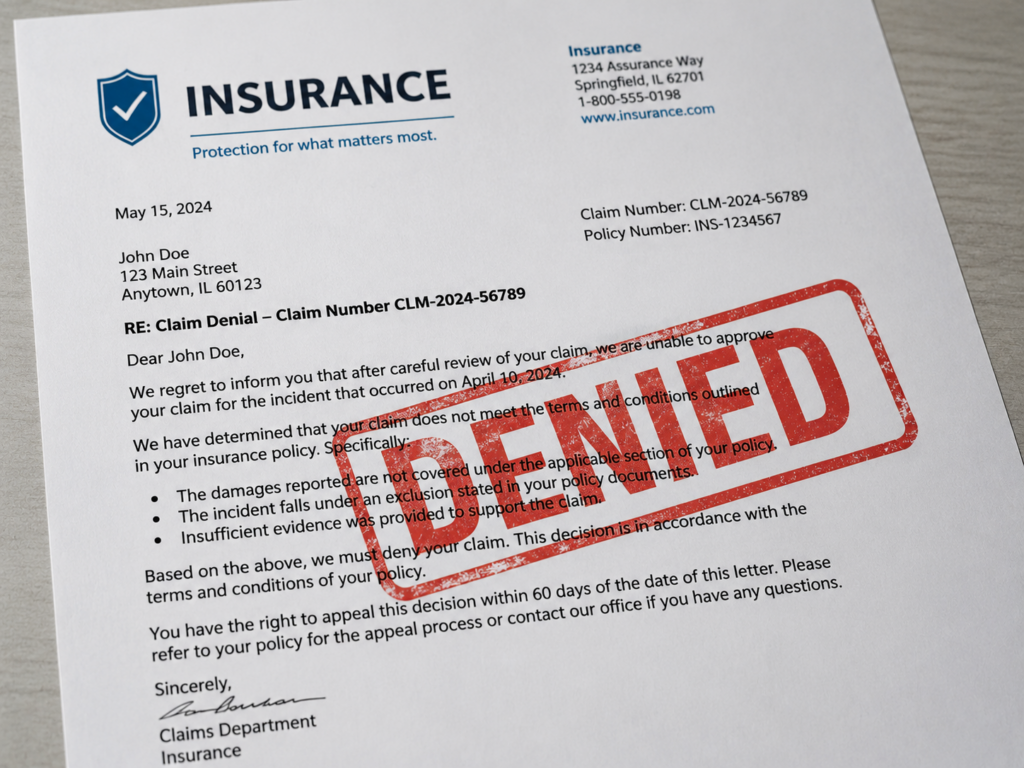
If your insurance claim is denied, what to do next depends on the reason for the denial. A denial does not always mean your case is over. Additional evidence, clarification of the facts, negotiations, or legal action may still allow you to pursue compensation after an accident caused by someone else’s negligence.
When an Insurance Denial Is Not the End of Your Case
Receiving a letter stating that your insurance claim has been denied can feel overwhelming, especially when you’re already dealing with injuries, medical bills, and lost income. Many accident victims assume a denial means they have no legal options left.
In reality, insurance companies deny claims for many reasons, and not every denial is justified. Some denials result from incomplete documentation, disputed liability, or disagreements about the extent of an injury rather than the validity of the claim itself.
If you were injured in an Indiana car accident because of another party’s negligence, understanding why a claim was denied is the first step toward protecting your rights. Isaacs & Isaacs Law Firm can evaluate your case, identify the reason for the denial, and help you pursue the compensation you may still be entitled to recover.
Key Takeaways
- A denied claim does not automatically prevent you from recovering compensation. Many denials result from disputes over liability, medical evidence, or policy interpretation rather than a lack of legal merit.
- Understanding the insurance company’s stated reason for denying the claim is essential before deciding on the next steps, whether that involves providing additional documentation, negotiating, or pursuing litigation.
- Strong evidence, including medical records, witness statements, accident reports, and expert opinions, can often strengthen a claim after an initial denial.
- Indiana’s filing deadlines and comparative fault rules continue to apply even if an insurance company denies your claim, making it important to act promptly.
- An experienced personal injury attorney can evaluate whether the denial is supported by the facts and help pursue every available legal option.
Why Would an Insurance Company Deny an Injury Claim?
Insurance companies investigate every claim before deciding whether to pay compensation. Sometimes a denial is based on legitimate coverage issues. In other situations, the insurer may dispute liability or the amount of damages being claimed.
Understanding the reason for the denial will help determine the most appropriate response.
The Insurance Company Disputes Liability
One of the most common reasons for denial is that the insurer believes its policyholder was not responsible for causing the accident.
This may happen when:
- The parties provide conflicting accounts.
- There are no independent witnesses.
- Physical evidence is limited.
- The insurer believes another driver caused the crash.
In these situations, additional evidence may help establish negligence and strengthen your claim.
Insufficient Evidence
Insurance companies rely heavily on documentation.
A claim may be denied if there is insufficient evidence demonstrating:
- How the accident occurred
- Who was responsible
- The severity of the injuries
- The financial losses resulting from the accident
Medical records, photographs, surveillance footage, expert opinions, and witness statements may all help address evidentiary gaps.
Delayed Medical Treatment
Waiting too long to seek treatment may allow an insurer to argue that:
- The injuries were not serious.
- The accident did not cause the injuries.
- Another event caused the medical condition.
Prompt medical evaluation creates documentation that helps connect the injuries to the accident.
Missed Reporting or Filing Deadlines
Insurance policies often require prompt notice of an accident.
Separately, Indiana law establishes deadlines for filing personal injury lawsuits. Under Indiana Code § 34-11-2-4, most personal injury actions must generally be filed within two years of the accident.
Although a claim denial and the statute of limitations are separate issues, delaying action after a denial could affect your legal rights.
Coverage Disputes
Sometimes the disagreement has little to do with the accident itself.
Instead, the insurer may argue that:
- The policy was not in effect.
- Coverage exclusions apply.
- Another insurance policy is primarily responsible.
- The damages exceed available policy limits.
Coverage disputes can become legally complex, particularly when multiple insurance policies may apply.
What Should You Do After Receiving a Claim Denial?
A denial letter should not be ignored, but neither should it automatically be accepted as the final answer.
Several important steps may help protect your rights.
Carefully Read the Denial Letter
Insurance companies are generally required to explain why a claim was denied.
Review the letter carefully and identify:
- The stated reason for denial
- Any missing documentation
- Applicable policy provisions
- Deadlines for responding
Understanding the insurer’s position is essential before deciding how to proceed.
Gather Additional Documentation
Sometimes a denial occurs simply because important information was unavailable during the initial review.
Additional documentation may include:
- Updated medical records
- Physician reports
- Diagnostic imaging
- Expert opinions
- Witness statements
- Accident reconstruction reports
- Employment records showing lost income
Providing complete documentation may resolve some disputes without litigation.
Continue Medical Treatment
If you are still recovering, continue following your physician’s treatment recommendations.
Consistent medical care demonstrates that your injuries remain ongoing and helps document the full extent of your damages.
Stopping treatment prematurely may make it more difficult to establish the severity of your injuries later.
Can Additional Evidence Strengthen a Denied Claim?
Yes.
One of the most effective ways to get help with a denied injury claim is by identifying evidence that was unavailable or overlooked during the insurer’s initial review.
Medical Evidence
Updated physician evaluations, specialist consultations, or additional diagnostic testing may provide a clearer understanding of your injuries and future medical needs.
For example, injuries involving chronic pain, traumatic brain injuries, or spinal conditions sometimes become more apparent only after additional treatment.
Independent Witnesses
Witness testimony may help resolve conflicting accounts regarding how the accident occurred.
Independent witnesses often provide objective observations that support liability.
Expert Testimony
Depending on the circumstances, experts may assist with issues involving:
- Accident reconstruction
- Medical causation
- Future medical expenses
- Lost earning capacity
- Permanent disability
Expert analysis can be particularly valuable in complex personal injury cases involving catastrophic injuries or disputed fault.
Can You Appeal an Insurance Company’s Decision?
In many situations, yes.
The availability and process for appealing an insurance decision depend on the type of insurance involved and the reason for the denial.
Some claims may be resolved through additional negotiations between the parties. Others involve submitting additional documentation or requesting the insurer reconsider its position.
If negotiations are unsuccessful, filing a personal injury lawsuit may become the appropriate next step.
Negotiation Before Litigation
Many personal injury claims are resolved through continued negotiations after additional evidence is presented.
Attorneys often communicate directly with insurers by:
- Responding to disputed liability arguments
- Addressing inaccuracies in the denial
- Providing additional medical evidence
- Explaining applicable Indiana law
- Demonstrating the value of damages
These negotiations may lead to a settlement without requiring a trial.
Filing a Lawsuit
If the insurance company continues denying responsibility despite strong evidence, filing suit may become necessary.
Litigation allows both parties to obtain additional evidence through discovery and present their positions before a judge or jury if the case does not settle.
Indiana follows a modified comparative fault system under Indiana Code § 34-51-2. Generally, an injured person may recover damages if they are not more than 50% responsible for the accident, although any recovery is reduced by their percentage of fault.
Understanding how comparative fault affects your case is an important part of evaluating whether litigation is appropriate.
When Should You Speak With a Personal Injury Attorney?
While some insurance issues can be resolved by providing additional documentation, others involve legal disputes that require a more comprehensive approach.
You should consider speaking with a personal injury attorney if:
- The insurance company denies liability.
- The insurer claims your injuries are unrelated to the accident.
- Multiple parties may be responsible.
- The settlement offer is significantly lower than your losses.
- You suffered serious or permanent injuries.
- The insurer delays responding or repeatedly requests unnecessary documentation.
- You are approaching Indiana’s statute of limitations.
An attorney can evaluate the insurer’s reasoning, identify weaknesses in the denial, and develop a strategy for pursuing compensation.
How an Attorney Can Help After a Claim Denial
Legal representation provides more than simply filing paperwork.
A personal injury attorney may assist by:
- Investigating the accident more thoroughly
- Gathering additional medical and expert evidence
- Interviewing witnesses
- Working with accident reconstruction professionals
- Negotiating directly with insurance adjusters
- Calculating the full value of current and future damages
- Filing a lawsuit when necessary
Having experienced legal counsel also helps ensure important deadlines are not missed while the claim continues.
What Mistakes Should You Avoid After a Claim Is Denied?
The actions you take after a denial can significantly affect your ability to recover compensation.
Do Not Assume the Insurance Company Is Correct
Insurance companies evaluate claims from their own perspective.
A denial does not necessarily mean your claim lacks merit or that you are legally barred from recovering compensation.
Avoid Giving Additional Recorded Statements Without Advice
After denying a claim, an insurer may continue requesting information.
Before providing additional recorded statements or signing new documents, understand how your statements could affect your legal rights.
Do Not Stop Collecting Evidence
Even after receiving a denial, continue documenting:
- Medical treatment
- Prescription expenses
- Rehabilitation costs
- Lost wages
- Property damage
- Communication with insurers
Additional documentation may become valuable during negotiations or litigation.
Do Not Miss Legal Deadlines
Negotiations with an insurance company do not automatically pause Indiana’s statute of limitations.
Waiting too long after a denial could affect your ability to pursue compensation through the courts.
What Compensation May Still Be Available?
Even after an insurance denial, you may still be entitled to pursue damages if another party’s negligence caused your injuries.
Depending on the circumstances, compensation may include:
- Emergency medical treatment
- Hospital expenses
- Future medical care
- Physical therapy
- Prescription medications
- Lost wages
- Reduced earning capacity
- Pain and suffering
- Permanent disability
- Loss of enjoyment of life
Every case is different. The available damages depend on the facts of the accident, the severity of the injuries, and the evidence supporting the claim.
Expert Tips
- Read the denial letter carefully before responding. Understanding the insurance company’s stated reasons can help determine whether additional evidence or legal action is appropriate.
- Continue following your doctor’s treatment plan even after a denial. Consistent medical records can strengthen your case and demonstrate the ongoing impact of your injuries.
- Keep copies of every letter, email, medical bill, and insurance communication. Organized documentation often becomes critical during negotiations or litigation.
- Avoid accepting the denial as final without first discussing your options with a personal injury attorney. Many denied claims can still be resolved through negotiations or by presenting stronger evidence.
- Act promptly after receiving a denial. Indiana’s filing deadlines continue to apply even while disputes with the insurance company are ongoing.
Frequently Asked Questions
Does a denied insurance claim mean I cannot recover compensation?
No. A denial simply means the insurance company has decided not to pay the claim based on its current evaluation. Additional evidence, negotiations, or legal action may still result in compensation.
How long do I have to challenge a denied injury claim in Indiana?
The answer depends on the circumstances of your claim. While insurance policies may contain deadlines for certain actions, Indiana generally allows two years from the date of the injury to file most personal injury lawsuits. Speaking with an attorney promptly can help protect your rights.
What evidence can help after my injury claim is denied?
Medical records, physician opinions, witness statements, photographs, surveillance footage, accident reconstruction reports, employment records, and other documentation may all strengthen a denied claim.
Can an attorney negotiate with the insurance company after a denial?
Yes. Attorneys frequently negotiate with insurers after a denial by presenting additional evidence, responding to disputed liability arguments, and demonstrating the value of the injured person’s damages.
What if the insurance company says I was partly at fault?
Indiana follows a modified comparative fault system. If you are found to be 50% or less responsible for the accident, you may still recover compensation, although your recovery may be reduced by your percentage of fault.
References
Indiana General Assembly
https://iga.in.gov/
Indiana Courts
https://www.in.gov/courts/
Indiana Code § 34-11-2-4 (Statute of Limitations)
https://iga.in.gov/
Indiana Code § 34-51-2 (Comparative Fault Act)
https://iga.in.gov/
Indiana Department of Insurance
https://www.in.gov/idoi/
National Highway Traffic Safety Administration
https://www.nhtsa.gov/
Taking the Next Step After an Insurance Claim Denial
Receiving a denial can be discouraging, but it does not necessarily mean your case is over. Understanding why the claim was denied, gathering additional evidence, continuing your medical treatment, and exploring your legal options can all improve your chances of recovering the compensation you deserve. Many successful personal injury claims involve overcoming initial disagreements with the insurance company rather than accepting the first decision.
If you’re wondering what to do if your insurance claim is denied, need help with a denied injury claim, or want to appeal an insurance decision, Isaacs & Isaacs Law Firm is here to help. Our experienced attorneys can review your case, explain your legal options, and fight for the compensation you deserve. Contact us today for a free consultation.