
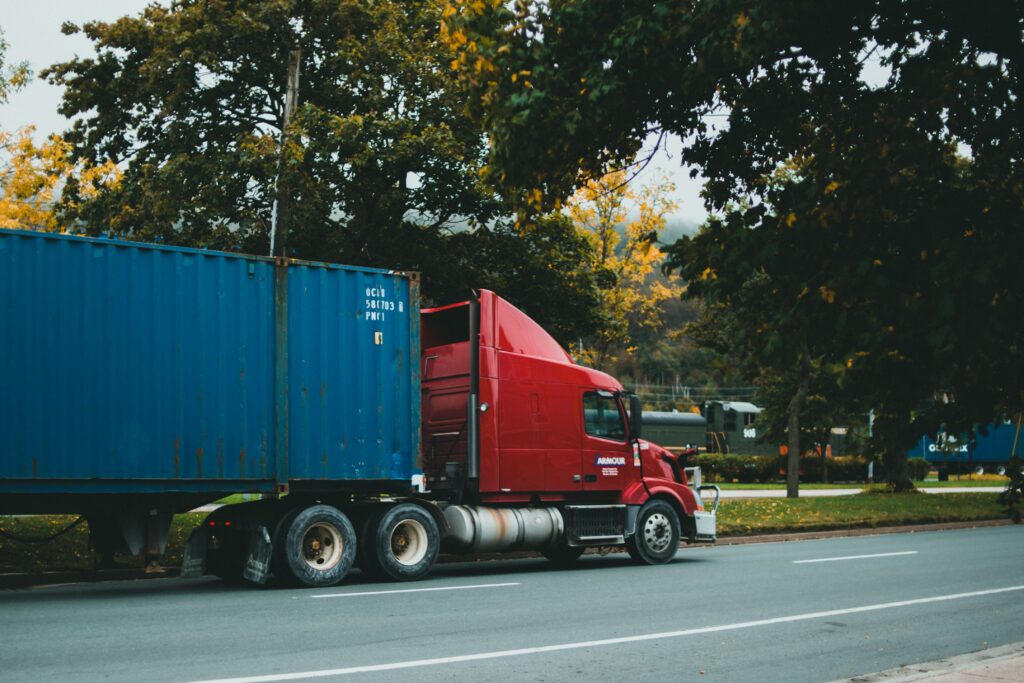
Who Can Be Liable When Truck Cargo Causes an Accident?
Liability for a cargo securement accident may extend beyond the truck driver to a motor carrier, cargo-loading company, shipper, or another party whose negligence contributed to an unsafe load. In Illinois, determining responsibility requires examining who loaded, secured, inspected, and transported the cargo and how those actions contributed to the collision.
Why Cargo Loading and Securement Matter
Commercial trucks transport everything from consumer goods and building materials to heavy machinery and industrial equipment. When that cargo is properly loaded and secured, it should remain stable during normal transportation. When loading or securement fails, however, cargo can shift inside a trailer, fall onto the roadway, affect the truck’s stability, or contribute to a rollover or loss of control.
Federal Motor Carrier Safety Administration (FMCSA) regulations establish detailed cargo securement requirements for commercial vehicles operating in interstate commerce. These rules are designed to prevent cargo from shifting on or within a vehicle or falling from it. Requirements may vary depending on the type of cargo being transported.
When improperly loaded or unsecured cargo causes an Illinois truck accident, determining responsibility can be complicated. The driver may have had inspection responsibilities, but another company may have loaded the trailer or selected the securement equipment. The motor carrier may also have responsibilities involving its vehicles, employees, and safety practices.
Identifying each party’s role is essential to evaluating truck load liability and pursuing compensation from those whose negligence contributed to the crash. Isaacs & Isaacs Law Firm can investigate the loading, securement, inspection, and transportation of a commercial load to determine who may be responsible.
Key Takeaways
- More than one party may be responsible for an unsafe load. Depending on who controlled the loading, securement, inspection, and transportation process, liability may fall on the truck driver, motor carrier, loading company, shipper, or other parties.
- Federal regulations establish cargo securement standards. FMCSA rules require covered cargo to be properly contained, immobilized, or secured so that it does not shift or fall in a way that affects safe vehicle operation.
- Drivers have cargo-related responsibilities. Federal regulations generally require drivers to ensure cargo is properly distributed and secured and to conduct certain inspections during a trip, subject to exceptions for some types of sealed or inaccessible loads.
- Evidence should be preserved quickly. Bills of lading, loading records, photographs, securement equipment, inspection records, vehicle data, and communications can help establish who handled the load and what went wrong.
- Illinois law can affect both liability and filing deadlines. Personal injury actions in Illinois generally have a two-year statute of limitations, although exceptions can apply in certain cases.
How Can Improper Cargo Cause a Truck Accident?
Cargo does not need to fall completely from a truck to create a serious hazard. Improper loading can affect how the vehicle handles even when the cargo remains inside the trailer.
Shifting Cargo
Cargo that is not properly immobilized may shift when a truck accelerates, brakes, turns, or changes lanes. A sudden change in the load’s position can affect the truck’s balance and make it more difficult for the driver to maintain control.
The danger can be particularly significant with heavy cargo because even relatively small movements can alter the vehicle’s center of gravity.
Falling Cargo
Materials that fall from a flatbed, trailer, or other commercial vehicle can create an immediate roadway hazard. Motorists may collide directly with the cargo or make sudden evasive maneuvers that lead to secondary crashes.
FMCSA’s cargo rules specifically aim to prevent articles from shifting on or within commercial vehicles or falling from them during transportation.
Overloaded or Poorly Distributed Cargo
How weight is distributed throughout a commercial vehicle can also affect safe operation. Improper distribution may influence stability, steering, and braking performance.
Cargo-related investigations therefore examine not only whether tiedowns failed but also how the load was positioned, distributed, and restrained.
What Do Federal Cargo Securement Rules Require?
Federal cargo securement requirements appear primarily in 49 CFR Part 393, Subpart I. These standards apply to cargo-carrying commercial motor vehicles operating in interstate commerce, subject to regulatory definitions and exceptions.
The general principle is straightforward: cargo must be adequately contained, immobilized, or secured so that it does not create an unreasonable safety risk during transportation.
Securement Systems Must Be Strong Enough
FMCSA requires structures and equipment used to secure cargo to meet applicable performance standards. Securement components must also be in proper working order and free from defects or damage that could negatively affect performance.
Depending on the load, securement methods can include:
- Tiedowns
- Chains
- Synthetic webbing
- Blocking
- Bracing
- Dunnage
- Shoring bars
- Chocks or wedges
- Other appropriate securement equipment
Cargo likely to roll must be restrained using methods such as chocks, wedges, or cradles that prevent movement.
Some Cargo Has Additional Requirements
Federal regulations contain commodity-specific rules for certain loads that present distinctive securement challenges.
These include:
- Logs
- Dressed lumber
- Metal coils
- Paper rolls
- Concrete pipe
- Intermodal containers
- Automobiles and light trucks
- Heavy vehicles, equipment, and machinery
- Flattened or crushed vehicles
- Large boulders
These commodity-specific provisions can become particularly important when determining whether the securement method used for a particular load complied with applicable safety standards.
Who Can Be Liable for Improperly Loaded Cargo?
A cargo-related truck accident does not automatically make one particular person or company responsible. Liability depends on each party’s role and whether its conduct contributed to the crash.
Truck Driver
A driver may potentially be responsible when the driver’s own negligent conduct contributes to a cargo problem, such as failing to perform an inspection required under applicable regulations or continuing to operate after discovering an unsafe condition.
Motor Carrier
The trucking company may face liability based on the circumstances surrounding the collision and its relationship with the driver.
An investigation may examine whether the carrier:
- Used appropriate cargo securement equipment
- Maintained equipment used to secure the load
- Followed applicable federal safety requirements
- Properly trained or supervised employees
- Responded to known cargo or equipment problems
- Had policies or practices that contributed to unsafe transportation
The precise legal basis for carrier liability depends on the facts and applicable Illinois and federal law.
Cargo Loader
Some commercial loads are prepared by businesses other than the motor carrier. When a third-party company takes responsibility for loading or securing cargo, its conduct may require investigation if a loading error contributed to the accident.
Other Parties
Depending on the circumstances, additional companies involved in transporting, handling, or securing the cargo may also need to be investigated.
A commercial vehicle cargo claim should therefore examine the entire chain of responsibility rather than assuming the driver is the only potentially liable party.
What Responsibilities Does the Truck Driver Have?
Federal regulations impose important responsibilities on commercial drivers concerning cargo.
Under 49 CFR § 392.9, a driver generally may not operate a commercial motor vehicle unless the cargo is properly distributed and adequately secured as specified in the regulations.
Drivers generally must also ensure that:
- The vehicle’s cargo does not interfere with safe operation
- Equipment used to secure the cargo remains properly secured
- Cargo and securement devices are inspected within the first 50 miles after beginning a trip
- Necessary adjustments are made when required
- Cargo is reexamined at specified intervals during transportation
The regulation generally requires reexamination when the driver changes duty status, after the vehicle has been driven for three hours or 150 miles, whichever occurs first, and under other specified circumstances.
However, federal regulations provide exceptions to certain inspection requirements when cargo is sealed or has been loaded in a manner that makes inspection impracticable.
That distinction can be critical in determining whether a driver reasonably could have identified an unsafe load.
Can a Loading Company or Shipper Be Responsible?
Potentially, depending on its role.
Commercial freight operations can involve several separate businesses. One company may own the cargo, another may load it, another may provide the tractor or trailer, and a motor carrier may transport the shipment.
When a third party participates in loading or securing the cargo, an investigation may examine:
- Who physically loaded the cargo
- Who selected the securement method
- Who supplied tiedowns or other equipment
- Whether the load was sealed before the driver received it
- Whether defects were visible to the driver
- Who controlled how the cargo was positioned
- Whether loading instructions were provided
- Whether applicable securement requirements were followed
These distinctions matter because responsibility should be based on what each party actually did or controlled.
For example, a driver may have different opportunities to identify an obvious securement problem on an open flatbed than a loading defect hidden inside a sealed trailer. The specific facts must therefore be evaluated before assigning responsibility.
What Evidence Can Prove a Cargo Securement Failure?
A strong investigation needs to establish both how the load failed and who was responsible for the relevant decisions.
Photographs and Video
Images of the truck, trailer, cargo, tiedowns, roadway, and crash scene can help document how the cargo was positioned after the collision.
Nearby surveillance or traffic cameras may also provide information about the truck or cargo before or during the accident.
Bills of Lading and Shipping Documents
Shipping documentation may help identify the cargo, shipper, carrier, destination, and other businesses involved in transportation.
These records can provide an important starting point for determining who handled the load.
Loading and Inspection Records
Documents concerning when, where, and by whom the cargo was loaded or inspected can help establish each party’s responsibilities.
Securement Equipment
Chains, straps, binders, anchor points, and other securement devices may provide physical evidence of failure, damage, wear, or inappropriate use.
When possible, preserve this equipment before it is repaired, discarded, or returned to service.
Driver and Company Records
Additional evidence may include:
- Driver logs
- Dispatch records
- Training materials
- Safety policies
- Maintenance records
- Vehicle inspection reports
- GPS or telematics information
- Electronic vehicle data
- Internal communications
Expert analysis may also be necessary to determine whether the cargo was loaded and secured in accordance with applicable standards and whether the failure contributed to the collision.
How Does Illinois Law Affect a Cargo-Related Truck Accident Claim?
Illinois law governs important aspects of personal injury claims arising from truck crashes within the state.
Illinois Statute of Limitations
Under 735 ILCS 5/13-202, actions seeking damages for personal injury generally must be commenced within two years after the cause of action accrues.
Different circumstances can affect the applicable deadline. Injured people should therefore obtain advice about their specific case rather than assuming the general two-year period will always apply.
Cargo-related claims can also involve evidence controlled by several businesses, making prompt investigation important even when the filing deadline is still far away.
Comparative Negligence
Illinois uses a modified comparative negligence system.
When applicable, this means a plaintiff’s recovery may be reduced based on their percentage of fault. A plaintiff whose contributory fault exceeds 50% of the proximate cause of the injury is generally barred from recovering damages.
In a commercial truck case, defendants may dispute responsibility among themselves or argue that another motorist contributed to the collision. Identifying every potentially responsible party and obtaining evidence of how the crash occurred can therefore become especially important.
What Compensation May Be Available?
People injured because of improperly secured or loaded cargo may be able to seek compensation for accident-related losses.
Depending on the circumstances, recoverable damages may include:
- Emergency medical treatment
- Hospitalization
- Surgery
- Rehabilitation
- Future medical expenses
- Lost wages
- Reduced earning capacity
- Property damage
- Pain and suffering
- Disability
- Disfigurement
- Other legally recoverable losses
The amount available depends on the severity of the injuries, their long-term impact, the evidence establishing liability, and other case-specific factors.
When cargo causes catastrophic injuries, evaluating future medical and financial needs is especially important to avoid undervaluing the accident’s long-term consequences.
Frequently Asked Questions
Who is responsible when cargo falls off a truck?
Responsibility depends on why the cargo fell and who controlled its loading, securement, inspection, and transportation. Potentially responsible parties may include a driver, motor carrier, loading company, or another business involved in preparing or transporting the shipment.
Can I sue a trucking company for unsecured cargo?
Potentially. A trucking company may face liability when its own negligence or legally attributable conduct contributes to an accident involving unsecured cargo. The facts must establish both the relevant duty and a connection between the alleged failure and your injuries.
What are the federal rules for securing truck cargo?
FMCSA regulations require covered commercial cargo to be adequately contained, immobilized, or secured. The rules establish performance standards, working load requirements, tiedown requirements, and additional standards for specific commodities.
Does cargo have to fall off the truck for there to be a claim?
No. Cargo can contribute to an accident without leaving the vehicle. A shifting load can affect a truck’s balance, stability, steering, or handling and may contribute to a rollover or loss-of-control crash.
Is a truck driver required to inspect cargo during a trip?
Generally, federal regulations require drivers to inspect cargo and securement devices within the first 50 miles and reexamine them at specified intervals. Certain exceptions apply, including situations involving sealed or otherwise inaccessible cargo.
What evidence is important in a cargo-related truck accident?
Important evidence may include photographs, shipping documents, loading records, inspection reports, securement equipment, driver records, dispatch communications, electronic vehicle information, and witness statements.
How long do I have to file a truck accident lawsuit in Illinois?
Illinois generally requires personal injury actions to be filed within two years after the cause of action accrues under 735 ILCS 5/13-202. Exceptions may apply, so the deadline should be evaluated based on the specific circumstances.
References
Federal Motor Carrier Safety Administration, Cargo Securement Rules
FMCSA Cargo Securement Rules
Electronic Code of Federal Regulations, 49 CFR Part 393, Subpart I, Protection Against Shifting and Falling Cargo
49 CFR Part 393, Subpart I
Electronic Code of Federal Regulations, 49 CFR § 392.9, Inspection of Cargo, Cargo Securement Devices and Systems
49 CFR § 392.9
Federal Motor Carrier Safety Administration, Motor Carrier Safety Planner, Cargo Securement
FMCSA Cargo Securement Guidance
Illinois General Assembly, 735 ILCS 5/13-202, Personal Injury
Illinois Personal Injury Statute of Limitations
Pursuing Accountability After a Cargo-Related Truck Accident
Improperly loaded or unsecured cargo can turn a commercial truck into an even greater roadway hazard. Cargo may fall into traffic, shift enough to destabilize the vehicle, or contribute to a rollover or loss-of-control collision. Federal regulations establish detailed securement requirements because safe loading and transportation are essential parts of commercial trucking.
Determining who should pay for the resulting injuries requires more than identifying the driver. An investigation may need to examine the motor carrier, loading company, shipper, and other businesses involved in preparing and transporting the load. Shipping records, inspections, photographs, physical equipment, and electronic information can help establish where the failure occurred.
If you or a loved one was injured in a cargo-related truck accident in Illinois, Isaacs & Isaacs Law Firm can investigate how the shipment was loaded and secured, identify potentially responsible parties, and help protect important evidence. Contact Isaacs & Isaacs Law Firm for a free consultation to discuss your legal options.
Responsible Law Firm: Isaacs & Isaacs Law Firm
Office Address: 1601 Business Center Ct., Louisville, KY 40299