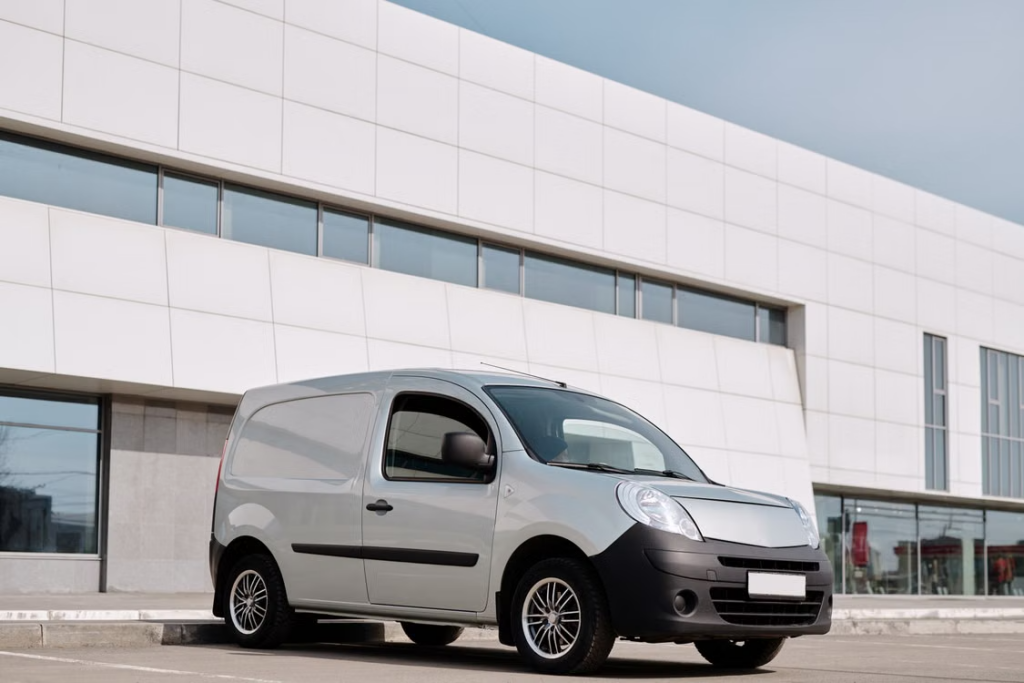
If someone driving a company vehicle causes an accident, both the driver and their employer may be legally responsible for your injuries.
In Indiana, a company vehicle accident claim may involve employer liability, commercial auto insurance, and additional evidence concerning the driver’s employment duties. Whether the company is responsible depends largely on the driver’s relationship with the business and what they were doing when the crash occurred.
Key Takeaways
- Under Indiana’s doctrine of respondeat superior, an employer may be liable when an employee causes a crash while acting within the scope of employment, but a company name on the vehicle does not establish liability by itself.
- Commercial auto insurance may cover the crash, and claims can also involve the vehicle owner, a maintenance provider or another negligent party, depending on the facts.
- Employment records, vehicle data, dashcam footage and company communications should be preserved promptly because they help prove what the driver was doing.
Why Accidents Involving Company Vehicles Can Be More Complicated
Being injured by a company vehicle can raise questions that do not usually arise after an ordinary car accident. The person behind the wheel may have been making deliveries, transporting equipment, visiting customers, or performing another job-related task.
Although the driver may have caused the collision, the business employing them could also bear responsibility.
These cases often require examining employment records, company policies, commercial insurance coverage, and the circumstances surrounding the driver’s trip.
For injured victims, identifying every potentially responsible party is important because serious accidents can result in substantial medical expenses, lost income, and long-term consequences.
Understanding Indiana’s employer liability rules can help determine whether compensation may be available from the driver, the business, or another responsible party.
If you were injured by a company-owned or commercially operated vehicle, a personal injury attorney can investigate the circumstances and evaluate your legal options.
Who Can Be Held Liable After a Company Vehicle Accident?
Determining liability begins with identifying who caused the accident and whether another party is legally responsible for that person’s conduct.
The Negligent Driver
Drivers operating company vehicles must follow applicable traffic laws and exercise reasonable care.
A driver may be personally liable for injuries caused by negligence, including speeding, distracted driving, unsafe lane changes, or failing to yield.
Evidence such as police reports, witness statements, vehicle damage, and available recordings may help establish fault.
The Driver’s Employer
An employer may be liable when an employee causes an accident while acting within the scope of employment.
This principle is known as respondeat superior, meaning that an employer can be held responsible for certain wrongful acts committed by employees in connection with their work.
However, employer liability is not automatic merely because a company name appears on the vehicle.
Other Potentially Responsible Parties
Depending on the circumstances, additional parties may include:
- A vehicle owner who is legally responsible under a separate theory of negligence
- A maintenance provider whose negligent repairs contributed to the crash
- Another driver whose actions helped cause the collision
- A business whose independent negligence contributed to the accident
Each party’s potential responsibility must be supported by evidence.
When Is an Employer Responsible for an Employee’s Driving?
Indiana courts apply established principles of vicarious liability when determining whether an employer is responsible for an employee’s conduct.
The central issue is whether the employee was acting within the scope of employment when the negligent conduct occurred.
Driving While Performing Job Duties
Employer liability may arise when an employee is operating a vehicle to perform assigned work.
Relevant activities may include making deliveries, transporting materials, traveling between work locations, or completing business-related assignments.
The analysis considers whether the employee’s conduct was sufficiently connected to their employment.
Personal Errands and Deviations
An employee may sometimes use a company vehicle for personal reasons.
If the employee substantially departs from work duties for an independent personal purpose, the employer may argue that the driver was acting outside the scope of employment.
However, the analysis is fact-specific.
A minor deviation does not necessarily eliminate employer liability, and company policies alone do not conclusively determine whether conduct falls within the scope of employment.
Driving to and From Work
Ordinary commuting is generally treated differently from driving while performing job duties.
An employer is not automatically responsible for an employee’s negligence during a normal commute.
Nevertheless, unusual employment arrangements, assigned travel duties, or other circumstances may affect the analysis.
The precise facts of the trip are therefore important.
Does Indiana Law Recognize Employer Liability for Company Vehicle Crashes?
Yes.
Indiana recognizes respondeat superior through common-law principles developed by its courts.
The Indiana Supreme Court has explained that determining whether conduct falls within the scope of employment involves examining its connection to the employee’s assigned duties.
In Barnett v. Clark, 889 N.E.2d 281 (Ind. 2008), the court addressed the scope-of-employment analysis and emphasized the importance of the circumstances surrounding the employee’s conduct.
The doctrine does not mean every act by an employee creates employer liability.
Instead, the injured person must establish the relevant employment relationship and a sufficient connection between the employee’s conduct and their work.
This is why employment records, trip information, and company communications can become important evidence.
Can You Sue a Company for Negligent Hiring or Supervision?
Potentially.
Apart from vicarious liability, a business may face direct liability for its own negligence.
Possible claims may involve negligent hiring, retention, training, supervision, or entrustment of a vehicle.
Negligent Hiring and Retention
A negligent hiring or retention claim generally focuses on whether the employer failed to exercise reasonable care concerning an employee whose known or reasonably discoverable risks created foreseeable danger.
Relevant evidence may include the driver’s qualifications, driving history, and information available to the employer.
A prior traffic violation does not automatically establish negligent hiring.
The claim requires proof satisfying the applicable legal elements.
Negligent Entrustment
Negligent entrustment may arise when someone provides a vehicle to a person they know, or should know, is likely to operate it in a manner creating an unreasonable risk of harm.
The vehicle owner’s knowledge and the driver’s fitness to operate the vehicle are important considerations.
Limits on Separate Employer Negligence Claims
Indiana law contains important limitations on pursuing direct negligence claims against employers when they admit that an employee was acting within the scope of employment.
In Sedam v. 2JR Pizza Enterprises, LLC, 84 N.E.3d 1174 (Ind. 2017), the Indiana Supreme Court addressed the relationship between admitted vicarious liability and separate negligent hiring, training, or supervision claims.
An attorney should evaluate whether a proposed direct negligence claim is legally available rather than assuming that every theory can proceed simultaneously.
How Does Commercial Auto Insurance Work After a Company Vehicle Accident?
Commercial auto insurance is designed to address specified risks associated with vehicles used for business purposes.
However, coverage depends on the policy, insured parties, covered vehicles, exclusions, and circumstances of the collision.
Commercial Liability Coverage
A business auto liability policy may provide coverage for bodily injury and property damage arising from a covered accident.
Potentially applicable coverage depends on the policy’s terms and whether the driver and vehicle qualify under those terms.
The existence of a commercial policy does not guarantee that every accident involving a company vehicle is covered.
Indiana’s Minimum Financial Responsibility Requirements
Indiana Code 9-25-4-5 generally establishes minimum motor vehicle liability coverage requirements of:
- $25,000 for bodily injury or death of one person
- $50,000 for bodily injury or death of two or more people in one accident
- $25,000 for property damage in one accident
These are general minimum requirements, not a statement of the coverage available under every commercial policy.
Certain commercial vehicles and motor carriers may be subject to additional state or federal financial responsibility requirements.
Federal Requirements for Certain Commercial Motor Carriers
Some interstate motor carriers are subject to federal financial responsibility regulations under 49 CFR Part 387.
Applicable requirements depend on factors such as the vehicle, cargo, and type of transportation.
These regulations can be particularly relevant in serious commercial truck accident claims.
However, not every company-owned passenger vehicle or delivery vehicle is subject to the same federal insurance requirements.
What Evidence Can Prove an Employer Liability Claim?
An employer liability claim after a crash often requires more than establishing that the employee caused the collision.
Evidence must also address the driver’s relationship with the company and the purpose of the trip.
Employment and Assignment Records
Relevant records may include employment agreements, job descriptions, work schedules, dispatch instructions, and delivery assignments.
These documents can help determine whether the driver was performing employment duties.
Vehicle Ownership and Insurance Documents
Registration records, lease agreements, insurance policies, and company vehicle assignments may clarify ownership and potential coverage.
However, ownership and insurance coverage are distinct from the legal question of employer liability.
Electronic Records and Communications
Depending on the vehicle and business, useful evidence may include GPS information, telematics, dashcam footage, electronic logs, and work-related messages.
These materials may help establish where the driver was traveling and whether the trip was connected to company business.
Accident and Medical Evidence
Police reports, photographs, witness statements, and accident reconstruction may help establish negligence.
Medical records, treatment bills, and financial documentation support the injury and damages portions of the claim.
An attorney may send preservation requests to reduce the risk that relevant company records are deleted or overwritten.
What Compensation Can You Recover After a Company Vehicle Accident?
An injured person may pursue compensation for losses caused by another party’s negligence.
Depending on the circumstances, recoverable damages may include:
- Emergency medical treatment and hospitalization
- Rehabilitation and ongoing medical care
- Reasonably supported future medical expenses
- Lost wages and diminished earning capacity
- Physical pain and suffering
- Emotional distress associated with the injury
- Permanent impairment or disability
- Property damage and other recoverable losses
The value of a claim depends on the severity of the injuries, supporting evidence, applicable law, and available sources of recovery.
A commercial insurance policy may affect the funds available to satisfy a claim, but policy limits do not automatically determine the full legal value of the injuries.
What If the Company Claims the Driver Was an Independent Contractor?
A company may argue that the driver was an independent contractor rather than an employee.
This distinction can affect vicarious liability.
Indiana courts generally examine the actual working relationship rather than relying solely on the label used in a contract.
Relevant considerations may include the business’s right to control the work, the nature of the services, and other characteristics of the relationship.
An independent contractor classification does not automatically eliminate every potential claim against the business.
Separate negligence theories or other applicable legal rules may still require examination.
How Does Comparative Fault Affect an Indiana Company Vehicle Accident Claim?
Indiana generally follows a modified comparative fault system under Indiana Code 34-51-2.
For claims governed by the Comparative Fault Act, an injured plaintiff whose fault exceeds 50% generally cannot recover damages.
When the plaintiff’s fault is 50% or less, recoverable damages are reduced by the plaintiff’s percentage of responsibility.
The Act contains exceptions, and the applicable framework depends on the parties and type of claim.
In commercial vehicle accidents, fault disputes may involve vehicle positioning, traffic signals, right of way, or the actions of multiple drivers.
Evidence establishing the employee’s conduct and the circumstances of the crash can therefore affect both liability and compensation.
How Long Do You Have to File a Company Vehicle Accident Lawsuit in Indiana?
Indiana Code 34-11-2-4 generally provides a two-year statute of limitations for personal injury actions.
The deadline typically runs from when the injury occurs, although exceptions may apply.
Claims involving governmental entities can be subject to separate notice requirements and shorter deadlines under the Indiana Tort Claims Act.
Investigating the identity of the vehicle owner, employer, and other responsible parties early is important because the appropriate legal procedures may differ.
What Should You Do After Being Hit by a Company Vehicle?
Taking prompt action can help protect your health and preserve important evidence.
- Seek medical attention. Obtain appropriate treatment and document your injuries.
- Report the accident. Contact law enforcement when required and obtain the available report information.
- Identify the vehicle and business. Record the company name, license plate, vehicle markings, and driver information.
- Preserve evidence. Keep photographs, witness details, recordings, and relevant correspondence.
- Document your losses. Maintain medical bills, treatment records, wage information, and other expense documentation.
- Avoid premature settlement decisions. Make sure the responsible parties and the extent of your injuries have been evaluated.
- Consult a personal injury attorney. Legal counsel can investigate employment relationships, preserve business records, and identify applicable insurance coverage.
These steps may help strengthen a potential business vehicle injury lawsuit.
Frequently Asked Questions
Can I sue both the driver and the company after an accident?
Potentially. The driver may be personally responsible for negligent driving, while the employer may be vicariously liable if the driver was acting within the scope of employment. The available claims depend on the circumstances and applicable Indiana law.
What if the employee was driving a company vehicle after work hours?
The time of day does not automatically determine employer liability. The key issue is whether the employee was performing work-related duties or acting within the scope of employment when the accident occurred.
Does a company vehicle automatically have commercial insurance?
No. Although many businesses purchase commercial auto policies, the type and extent of coverage depend on the vehicle, business, and applicable insurance arrangements. The policy must be reviewed to determine whether the accident is covered.
What if the company denies that the driver was working?
An attorney may investigate work schedules, delivery records, GPS data, dispatch communications, and other evidence to determine the purpose of the trip. The company’s characterization of the driver’s activities is not necessarily conclusive.
Can I recover compensation if the company vehicle driver was uninsured?
Potentially. Depending on the circumstances, the employer, vehicle owner, or another responsible party may have applicable coverage or assets. Your own uninsured or underinsured motorist coverage may also be relevant, subject to policy terms and Indiana law.
What if a delivery driver caused my accident?
A delivery driver’s employer may be responsible if the driver was an employee acting within the scope of employment. If the driver worked as an independent contractor, liability may require a different analysis of the working relationship and any separate negligence by the business.
Can a company be liable for an accident caused by poor vehicle maintenance?
Potentially. If negligent maintenance contributed to the crash, the business or another party responsible for maintaining the vehicle may face liability. Maintenance records, inspection reports, and mechanical evidence can help establish whether a defect caused or contributed to the accident.
Are company vehicle accident settlements usually higher than regular car accident settlements?
Not necessarily. Commercial insurance may provide additional coverage in some cases, but settlement value depends primarily on liability, the severity of the injuries, documented losses, and available sources of recovery. A company vehicle’s involvement does not guarantee a larger settlement.
References
Indiana General Assembly, Indiana Code 34-11-2-4, Statute of Limitations for Personal Injury Actions
https://iga.in.gov/laws/2025/ic/titles/34#34-11-2-4
Indiana General Assembly, Indiana Code 34-51-2, Comparative Fault
https://iga.in.gov/laws/2025/ic/titles/34#34-51-2
Indiana General Assembly, Indiana Code 9-25-4-5, Motor Vehicle Financial Responsibility Requirements
https://iga.in.gov/laws/2025/ic/titles/9#9-25-4-5
Indiana General Assembly, Indiana Code 34-13-3, Indiana Tort Claims Act
https://iga.in.gov/laws/2025/ic/titles/34#34-13-3
Indiana Courts, Supreme Court Opinions and Decisions
https://www.in.gov/courts/opinions/
Indiana Courts, Indiana Rules of Evidence
https://rules.incourts.gov/Content/evidence/default.htm
Federal Motor Carrier Safety Administration, 49 CFR Part 387, Minimum Levels of Financial Responsibility for Motor Carriers
https://www.ecfr.gov/current/title-49/subtitle-B/chapter-III/subchapter-B/part-387
Federal Motor Carrier Safety Administration, Insurance Filing Requirements
https://www.fmcsa.dot.gov/registration/insurance-filing-requirements