
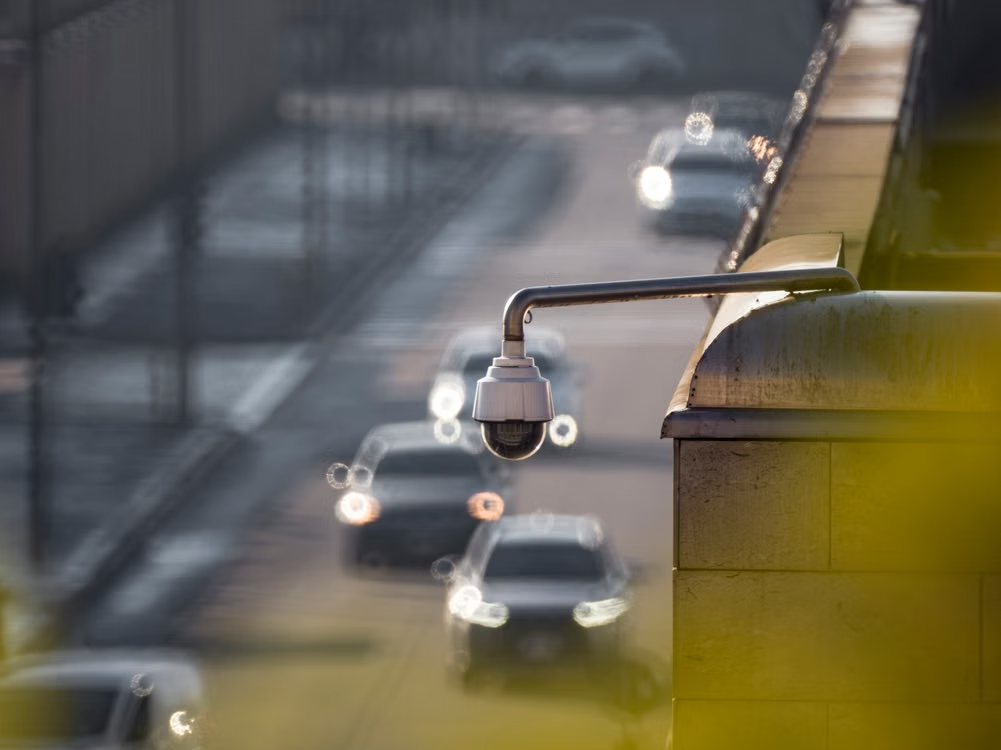
Yes, surveillance footage can strengthen a personal injury case by providing visual evidence of how an accident occurred and who may be responsible.
In Illinois, a surveillance footage accident claim may rely on recordings from nearby businesses, traffic cameras, dashcams, or security systems to establish negligence, challenge conflicting accounts, and support a demand for compensation.
Key Takeaways
- Surveillance footage can help prove negligence by showing unsafe driving, hazardous property conditions or how an accident unfolded.
- Many camera systems overwrite recordings, so send preservation requests quickly. Illinois courts also require footage to be authenticated before it can be admitted.
- Missing or deleted footage doesn’t end a claim. Other evidence can still prove fault, and the loss of relevant video can lead to court remedies or sanctions.
Why Video Evidence Can Make a Difference After an Accident
When an accident occurs, determining exactly what happened is not always straightforward. Drivers may disagree about traffic signals, witnesses may remember events differently, and injured victims may have limited recollection of the incident.
Surveillance footage can provide an independent record of important moments before, during, or after an accident.
For someone injured in a car collision, truck crash, or slip-and-fall incident, a recording may reveal details that are otherwise difficult to establish.
However, video evidence is not automatically available or admissible. Recordings may be overwritten, cameras may capture only part of an incident, and obtaining footage from private property owners can require legal action.
Understanding how surveillance evidence is collected, preserved, and evaluated can help injured victims protect their claims. An experienced personal injury attorney can also help identify potential recordings and take timely steps to preserve them.
How Can Surveillance Footage Help Prove Negligence?
In an Illinois personal injury case, the injured person generally must establish that another party owed a duty of care, breached that duty, and caused compensable injuries.
Surveillance footage may help prove these elements by documenting actions and conditions associated with the accident.
Establishing How an Accident Occurred
Recordings may capture vehicle movements, pedestrian activity, roadway conditions, or the sequence of events leading to an injury.
In a car accident claim, footage may show whether a driver failed to yield, entered an intersection against a traffic signal, or made an unsafe maneuver.
In a premises liability case, surveillance video may document a dangerous condition or the circumstances surrounding a fall.
Identifying Potentially Responsible Parties
Video may help identify vehicles, drivers, or businesses involved in an incident.
This can be particularly valuable when multiple parties may share responsibility, such as collisions involving commercial trucks or several vehicles.
However, identifying a person or vehicle does not automatically establish legal liability.
Resolving Conflicting Statements
When drivers or witnesses provide inconsistent accounts, recordings may help clarify disputed facts.
Video can also reveal limitations in witness observations, such as an obstructed view or incorrect assumptions about the accident sequence.
Nevertheless, footage must be interpreted carefully. Camera angles, image quality, and missing portions of a recording may limit what can reasonably be concluded.
What Types of Surveillance Footage Can Support an Injury Claim?
Several types of recordings may be relevant to a personal injury investigation.
Business Security Cameras
Retail stores, restaurants, gas stations, parking facilities, and commercial properties may operate security cameras.
These recordings can sometimes capture accidents occurring inside buildings, near entrances, or along adjacent roads.
Business footage may also be important in slip-and-fall cases because it can show when a hazardous condition developed and whether employees had an opportunity to address it.
Traffic and Intersection Cameras
Certain traffic monitoring systems may capture roadway activity.
However, not every traffic camera records or stores video. Some systems provide live monitoring only, while others serve specific enforcement or transportation purposes.
The availability of recordings depends on the agency, equipment, and applicable retention practices.
Dashcams and Vehicle Cameras
Dashcams may capture traffic conditions, driver behavior, and the moments surrounding a collision.
Commercial vehicles may also have onboard camera systems.
An attorney investigating a truck accident may seek relevant vehicle recordings alongside electronic data, driver records, and other evidence.
Residential and Private Security Cameras
Doorbell cameras and private security systems may capture accidents occurring near homes, sidewalks, driveways, or residential streets.
Property owners are not necessarily required to voluntarily provide their recordings to an injured person.
Legal procedures may be necessary when relevant footage cannot be obtained through a voluntary request.
How Do You Obtain Surveillance Footage After an Accident?
Obtaining accident camera footage often requires identifying the recording source and contacting the person or organization controlling it.
The process depends on whether the footage belongs to a private business, individual, or government agency.
Requesting Footage From Private Businesses
An injured person or attorney may contact a business and request that relevant recordings be preserved.
The request should identify the accident date, approximate time, location, and camera areas likely to contain useful evidence.
However, a preservation request does not automatically compel a business to provide footage.
The business may decline voluntary disclosure, require legal documentation, or refer the request to its legal department.
Seeking Government-Held Recordings
Some government agencies maintain recordings associated with transportation systems or public facilities.
In Illinois, the Freedom of Information Act, 5 ILCS 140, provides a process for requesting certain public records.
Whether a particular recording is available depends on whether it exists, is retained by a public body, and is subject to disclosure under applicable law.
FOIA does not require an agency to create a recording that does not exist.
Obtaining Footage Through Litigation
If a personal injury lawsuit is filed, Illinois discovery procedures may provide mechanisms for requesting relevant recordings.
Illinois Supreme Court Rule 214 governs the production of documents and tangible things, including electronically stored information.
When appropriate, attorneys may also use subpoenas and other authorized discovery procedures to obtain relevant evidence from nonparties.
The availability and scope of discovery remain subject to applicable procedural requirements and objections.
Why Are Surveillance Footage Preservation Requests Important?
Surveillance recordings can disappear quickly.
Some security systems automatically overwrite older files as storage capacity is reached. Others retain footage for different periods depending on their settings and operational needs.
There is no universal retention period that applies to every business or camera system.
A preservation request, sometimes called a litigation hold or preservation letter, asks the recipient to retain potentially relevant evidence.
What Should a Preservation Request Include?
A well-prepared request typically identifies:
- The accident date and approximate time
- The precise location of the incident
- Relevant cameras and recording systems
- The period before and after the accident that should be preserved
- The need to retain original files and associated information
- A request to suspend routine deletion or overwriting of relevant recordings
The appropriate preservation window depends on the circumstances.
For a slip-and-fall claim, footage recorded before the fall may be particularly important because it could show when a hazard appeared or whether employees inspected the area.
For a traffic collision, recordings immediately before and after impact may help establish vehicle movements and the accident sequence.
Does a Preservation Letter Guarantee the Footage Will Be Saved?
No.
A preservation letter is an important step, but it does not guarantee that the recipient will comply or that a recording still exists.
Whether a legal duty to preserve evidence applies depends on the circumstances and applicable law.
Prompt legal action can improve the opportunity to preserve relevant evidence before routine deletion occurs.
What Happens If Surveillance Footage Is Deleted or Destroyed?
The loss of relevant evidence is sometimes described as spoliation.
Illinois recognizes legal consequences for certain failures to preserve evidence, but not every missing recording establishes wrongdoing.
When Does a Duty to Preserve Evidence Arise?
Illinois courts have addressed negligent spoliation under established negligence principles.
In Boyd v. Travelers Insurance Co., 166 Ill. 2d 188 (1995), the Illinois Supreme Court recognized that a duty to preserve evidence may arise under particular circumstances.
In Dardeen v. Kuehling, 213 Ill. 2d 329 (2004), the court further addressed the requirements for establishing such a duty.
The existence of a duty depends on the circumstances, including whether the evidence was entrusted to the defendant and whether its relevance to potential litigation was foreseeable.
Simply showing that footage once existed and was later deleted does not automatically establish liability.
Can a Court Impose Sanctions for Missing Video?
Potentially.
Illinois Supreme Court Rule 219(c) authorizes sanctions for certain unreasonable failures to comply with discovery requirements or court orders.
The available remedy depends on the conduct, procedural history, and applicable legal standards.
Courts may consider whether evidence was intentionally destroyed, whether preservation obligations existed, and whether the loss prejudiced another party.
An attorney can evaluate whether missing footage supports a discovery motion, an evidentiary argument, or a separate legal claim.
Is Surveillance Footage Admissible in Illinois Courts?
Surveillance recordings are not automatically admitted simply because they appear relevant.
Under Illinois Rule of Evidence 901, evidence must be authenticated through sufficient proof that it is what its proponent claims.
Authentication may involve testimony from someone familiar with the recording system, a witness who recognizes the events, or other evidence establishing reliability.
What Can Affect a Recording’s Reliability?
Important considerations include:
- Whether the footage accurately represents the relevant location and events
- Whether the recording has been altered or edited
- Whether timestamps are accurate
- Whether the camera captured the complete incident
- Whether the recording can be connected to the accident being litigated
Illinois Rule of Evidence 403 may also affect admissibility when the danger of unfair prejudice, confusion, or other specified concerns substantially outweighs the recording’s probative value.
Attorneys must also consider other applicable evidentiary rules.
Why Is the Original Recording Important?
Original video files may contain information that is not visible in a screenshot or compressed copy.
Preserving the original format, associated metadata, and available system information can assist with authentication and technical review.
A short clip may omit events that provide important context.
For that reason, attorneys may seek a broader recording period rather than relying solely on a selected excerpt.
Can Surveillance Footage Affect Comparative Fault in Illinois?
Yes.
Illinois follows a modified comparative fault system under 735 ILCS 5/2-1116.
In actions governed by that provision, an injured plaintiff generally cannot recover damages if their contributory fault exceeds 50% of the proximate cause of the injury or damage.
When the plaintiff’s fault is 50% or less, recoverable damages are reduced according to their percentage of responsibility.
Video evidence may help determine whether the injured person or another party contributed to the accident.
For instance, footage may clarify traffic movements, pedestrian conduct, or the presence of an unsafe condition.
However, surveillance video does not automatically establish fault percentages. Liability must be evaluated using the complete evidence and applicable legal standards.
Can Video Evidence Help Establish Compensation?
Surveillance footage primarily helps establish how an accident happened and who may be responsible.
It may also provide context about the force of a collision or the circumstances of an injury.
However, a video evidence injury lawsuit generally requires additional proof of damages.
Medical records, diagnostic findings, treatment bills, wage documentation, and qualified expert testimony may establish the extent of the injured person’s losses.
Depending on the case, recoverable damages may include medical expenses, lost income, diminished earning capacity, pain and suffering, and reasonably supported future treatment costs.
Video should therefore be considered one part of the broader evidentiary record rather than a substitute for medical and financial documentation.
What Should You Do If You Believe a Camera Recorded Your Accident?
If you suspect that surveillance footage exists, take practical steps as soon as possible.
- Identify nearby cameras. Note businesses, residences, parking facilities, or vehicles that may have recorded the incident.
- Document camera locations. Photograph visible cameras and record the addresses of nearby properties.
- Preserve your own recordings. Save dashcam footage or other files in their original format when possible.
- Record the accident timeline. Note the date, approximate time, and sequence of events to help identify relevant footage.
- Avoid altering video files. Preserve originals and maintain copies separately.
- Contact an attorney promptly. Legal counsel can identify potential evidence holders, send preservation requests, and pursue appropriate discovery procedures.
Taking these steps early may reduce the risk that important recordings become unavailable.
Frequently Asked Questions
Can surveillance footage prove who caused a car accident?
Yes, potentially. Footage may show driver conduct, traffic signals, vehicle movements, or other facts relevant to negligence. However, the recording must be interpreted alongside the available evidence.
How long do businesses keep security camera footage?
Retention periods vary by business and recording system. Some footage may be overwritten automatically, so injured victims should not assume that recordings will remain available for weeks or months.
Can I force a business to give me surveillance footage?
A business generally does not have to provide private recordings merely because someone requests them. If litigation begins, relevant footage may be obtainable through applicable discovery procedures or subpoenas.
What if the camera did not capture the entire accident?
Partial footage may still be useful. It could establish vehicle positions, road conditions, or events surrounding the incident. However, missing context must be considered when evaluating its significance.
Can I use doorbell camera footage in an injury lawsuit?
Potentially. Doorbell camera recordings may be relevant if they captured the incident or surrounding circumstances. Their admissibility depends on authentication and other applicable evidence rules.
Can surveillance footage be used against me?
Yes. Video may support or contradict an injured person’s account. Attorneys should review recordings carefully because footage may affect liability, comparative fault, and the overall strength of a claim.
What if surveillance footage has already been deleted?
Your claim may still proceed using other evidence. An attorney can also investigate whether the footage was subject to a preservation obligation and whether its loss creates potential legal consequences.
How long do I have to file a personal injury lawsuit in Illinois?
Under 735 ILCS 5/13-202, most Illinois personal injury actions generally must be filed within two years after the cause of action accrues. Exceptions and shorter deadlines may apply, particularly when government defendants are involved.
References
Illinois General Assembly, 735 ILCS 5/13-202, Personal Injury Statute of Limitations
https://www.ilga.gov/legislation/ilcs/fulltext?DocName=073500050K13-202
Illinois General Assembly, 735 ILCS 5/2-1116, Comparative Fault
https://www.ilga.gov/legislation/ilcs/fulltext?DocName=073500050K2-1116
Illinois General Assembly, 5 ILCS 140, Freedom of Information Act
https://www.ilga.gov/legislation/ilcs/ilcs3.asp?ActID=85&ChapterID=2
Illinois Courts, Illinois Supreme Court Rules, Including Rules 214 and 219
https://www.illinoiscourts.gov/courts/supreme-court/supreme-court-rules/
Illinois Courts, Illinois Rules of Evidence, Including Rules 403 and 901
https://www.illinoiscourts.gov/courts/supreme-court/courts-supreme-court-illinois-rules-of-evidence/
Illinois Courts, Supreme Court Opinions and Case Information
https://www.illinoiscourts.gov/top-level-opinions/
Illinois Department of Insurance, Comparative Negligence
https://idoi.illinois.gov/consumers/consumerinsurance/comparative-negligence.html