
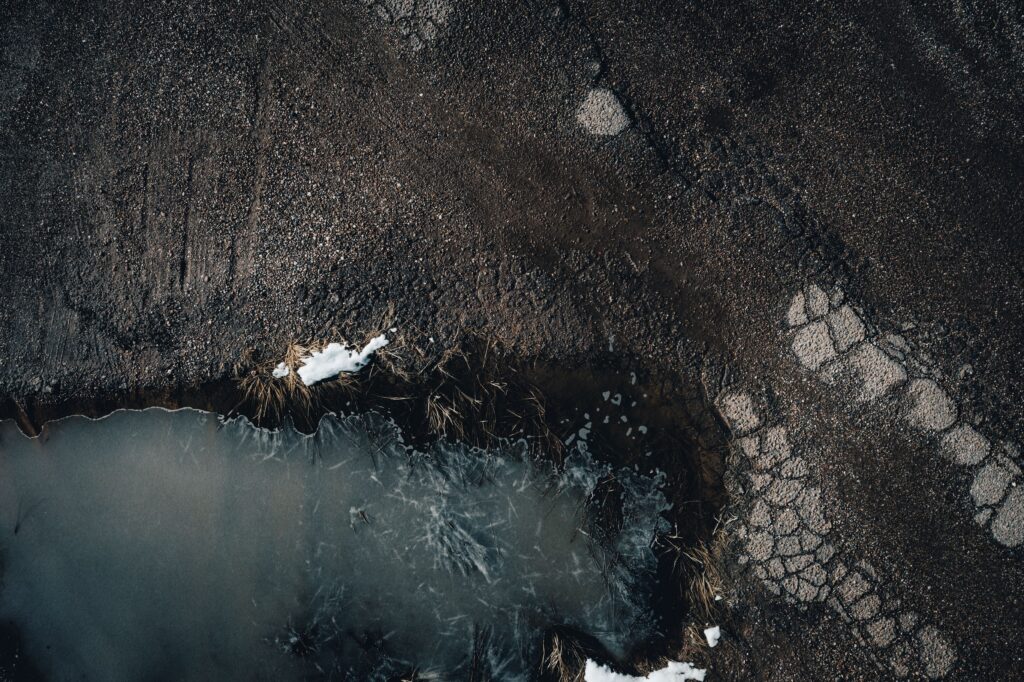
When Can a Road Hazard Lead to a Motorcycle Injury Claim?
Yes. Potholes, uneven pavement, loose debris, slick surfaces, unsafe construction zones, and other roadway defects can cause a motorcycle road hazard accident, particularly when the condition interferes with a motorcycle’s traction, steering, or stability. Depending on who created, controlled, or failed to address the hazard, a government entity, contractor, utility company, or another third party may potentially bear responsibility.
Why Road Conditions Matter More to Motorcyclists
A roadway condition that creates little more than a rough ride for someone in a passenger vehicle can pose a serious danger to a motorcyclist. Motorcycles have two wheels, a smaller contact area with the pavement, and different stability characteristics than cars and trucks. Sudden changes in traction or pavement elevation can therefore have much more serious consequences.
Federal safety agencies specifically recognize these risks. The National Highway Traffic Safety Administration (NHTSA) identifies slick roads, potholes, and road debris as hazards motorcyclists must be prepared to encounter. Federal Highway Administration (FHWA) research also recognizes that uneven surfaces, cracks, potholes, loose debris, fluid spills and pavement edge drop-offs can contribute to motorcycle loss-of-control crashes.
When poor roadway conditions cause a serious collision, however, proving road defect liability can be more complicated than showing that a hazard existed. An injured motorcyclist may need to identify who controlled the roadway, whether that party had a legal responsibility to address the condition, and whether special rules apply to the claim.
If you were injured because of a dangerous road condition, investigating the hazard promptly can help determine whether another party may be legally responsible.
Key Takeaways
- Road defects can pose unique risks to motorcycles. Potholes, pavement cracks, loose gravel, uneven surfaces, and other conditions can interfere with the limited tire contact and stability available to a motorcycle.
- Responsibility depends on who controlled or created the hazard. A government road authority, construction contractor, utility company, property owner or another third party may potentially be responsible depending on the circumstances and applicable law.
- Proving a dangerous condition existed is only part of a claim. A rider may also need to establish the responsible party’s legal duty, notice of the defect when required, failure to take reasonable action, and a connection between the hazard and the crash.
- Claims involving public roads may have special requirements. Government liability laws vary significantly by jurisdiction and may impose immunity provisions, notice procedures, or filing deadlines different from ordinary personal injury claims.
- Prompt evidence preservation can be critical. Road defects can be repaired, construction zones can change, and debris can disappear, making early photographs, measurements, video, and witness information particularly valuable.
Why Are Road Defects Especially Dangerous to Motorcyclists?
FHWA has recognized that pavement surfaces can affect motorcycles more than larger vehicles. Uneven surfaces, cracks, potholes, loose debris, and fluid spills can contribute to a motorcycle losing control. Pavement edge drop-offs can also present a greater hazard to motorcyclists.
The difference comes partly from how motorcycles maintain stability and traction.
A car has four tires contacting the roadway and can sometimes travel over a pavement irregularity without losing control. A motorcycle relies on two relatively small tire contact patches. If a wheel suddenly encounters a deep pothole, slippery substance, loose material, or significant change in pavement height, the rider may have little time or space to respond safely.
Roadway location matters as well. A defect encountered while traveling straight at a low speed may have different consequences than the same defect encountered while braking, leaning through a curve, or navigating an intersection.
That is why roadway design and maintenance should account for the needs of different road users rather than evaluating hazards solely from the perspective of passenger vehicles.
What Road Hazards Commonly Cause Motorcycle Accidents?
Not every imperfect road creates legal liability. However, several roadway conditions can pose significant safety risks to motorcycles.
Potholes and Broken Pavement
Potholes can cause a motorcycle wheel to drop suddenly, deflect the front tire or disrupt the rider’s control.
The size, depth, location, and visibility of a pothole can all become relevant when evaluating whether it presented a dangerous condition.
FHWA’s pavement guidance recognizes potholes as a distinct type of pavement distress, while federal motorcycle safety materials identify them as a hazard riders may encounter.
Uneven Pavement and Edge Drop-Offs
Differences in pavement height can destabilize motorcycles, particularly when a rider must cross the elevation change at an unfavorable angle.
Edge drop-offs between a paved lane and shoulder may also make it difficult for a rider who leaves the pavement to return safely. FHWA has specifically developed its Safety Edge treatment to reduce risks associated with vertical pavement edge drop-offs, noting that motorcycles are among the vehicles particularly vulnerable to these conditions.
Loose Gravel, Sand and Debris
Loose material can reduce tire traction and make braking or turning more difficult.
Road debris may include gravel, sand, vehicle parts, construction materials, fallen branches, or cargo dropped by another vehicle. Identifying where the material came from can be important when determining whether someone other than a roadway authority bears responsibility.
Oil, Fuel and Other Slippery Substances
Fluid spills can significantly reduce pavement friction. FHWA motorcycle road safety research identifies fluid spills as conditions that can contribute to motorcycle loss-of-control crashes.
A claim involving a spill may require determining its source. The potentially responsible party could differ depending on whether the substance came from a vehicle, construction operation, nearby property, or another source.
Construction Zones
Road construction can introduce temporary hazards such as:
- Uneven lanes
- Milled or grooved pavement
- Steel plates
- Loose gravel
- Abrupt pavement transitions
- Temporary lane configurations
- Construction debris
- Inadequate warnings
Construction conditions change frequently, so prompt documentation is especially important after a crash.
Railroad Crossings and Metal Surfaces
Railroad tracks, bridge grating, manhole covers, and steel construction plates can affect motorcycle handling or traction depending on their condition, orientation, and the surrounding roadway.
Wet metal surfaces can create additional traction concerns.
Unsafe Pavement Markings
Some pavement markings can change surface friction, particularly when wet. FHWA has examined the potential safety effects of pavement marking materials and other infrastructure features on motorcycles.
Whether a particular marking constitutes a legally actionable defect requires a fact-specific analysis, not an assumption that every painted surface is dangerous.
Who May Be Liable for a Dangerous Roadway?
Determining who controlled, created, or was responsible for addressing the condition is a central part of a dangerous roadway motorcycle claim.
State or Local Government Entities
State departments of transportation, counties, municipalities, and other public agencies may be responsible for particular roads.
Potential claims can involve allegations concerning roadway maintenance, repair, or warnings. However, government liability is governed by state-specific statutes and legal doctrines. Immunity may apply to certain governmental decisions or activities, and special procedures can restrict when and how a claim may be brought.
Road Construction Contractors
A private contractor may potentially bear responsibility when negligent construction, maintenance, or traffic-control practices create a dangerous condition.
Relevant evidence may include the construction contract, project plans, inspection records, work logs, photographs, and temporary traffic-control documentation.
Utility Companies
Roadways are sometimes opened or altered for utility installation or repair. If a utility company or its contractor leaves behind an unsafe patch, plate, trench, or other condition, its role may require investigation.
Commercial Drivers and Other Road Users
Not every roadway hazard originates with the road itself.
Cargo falling from a truck, vehicle parts left after a collision, or fluids leaking from a poorly maintained vehicle can create immediate hazards. In those circumstances, responsibility may extend to the person or business that created the dangerous condition.
What Must You Prove in a Road Defect Claim?
The precise legal elements vary by jurisdiction and the type of defendant. Generally, however, a negligence-based claim requires evidence showing a legal duty, breach of that duty, causation, and damages.
Road defect cases often add another important issue: notice.
Was the Responsible Party Aware of the Hazard?
Depending on applicable law, an injured person may need to establish that the responsible party knew or reasonably should have known about the dangerous condition and had sufficient opportunity to address it.
Evidence of notice might include:
- Previous complaints
- Maintenance requests
- Inspection records
- Prior repair attempts
- Work orders
- Reports from residents or motorists
- Records showing how long the condition existed
Notice may be analyzed differently when the defendant itself created the hazard.
Did the Defect Actually Cause the Crash?
The presence of a roadway defect does not necessarily prove causation.
The evidence should establish how the motorcycle encountered the hazard and how that condition contributed to the loss of control or collision. Vehicle speed, rider actions, weather, lighting, and other factors may also require analysis.
How Can You Prove a Road Hazard Caused the Crash?
Road defect evidence can change quickly, making early investigation particularly valuable.
Photograph and Measure the Defect
Photographs should document the hazard from several perspectives, when safe to do so.
Images showing the defect in relation to the travel lane, intersection, curve or surrounding roadway can provide useful context. In appropriate cases, investigators may measure the depth, width, length or elevation difference of a pavement defect.
Document Warning Signs and Sight Distance
Evidence should show whether riders approaching the hazard received adequate warning and whether the condition was reasonably visible.
Photographs taken from the rider’s direction of travel may help establish sight distance and visibility.
Identify Surveillance or Dashcam Footage
Nearby businesses, residences, public cameras, or other motorists may have captured the crash or the roadway condition.
Video can be especially valuable because it may establish both the existence of the defect and the motorcycle’s interaction with it.
Locate Maintenance and Complaint Records
Records from the entity responsible for the roadway may help establish inspections, previous complaints, repairs, or knowledge of recurring problems.
Obtaining these records may involve public-records procedures or formal discovery after litigation begins.
Preserve the Motorcycle
Damage to the motorcycle may provide information about the forces involved and the sequence of events. Serious or disputed cases may require inspection by an accident reconstruction or engineering professional.
Can a Motorcyclist Be Partially Responsible?
Potentially. The defendant may argue that the rider was speeding, failed to maintain control, ignored a warning, or otherwise contributed to the crash.
Whether such an argument reduces or prevents recovery depends on the jurisdiction’s comparative or contributory negligence rules.
Because this article does not target a particular state, no single fault threshold applies nationwide. Some states reduce damages according to the rider’s percentage of responsibility. Others restrict recovery when the injured person reaches a specified level of fault, while a small number apply stricter contributory negligence rules.
The existence of a road defect also does not automatically establish either party’s percentage of responsibility. Fault should be determined from evidence concerning the condition, available warnings, rider conduct, and the actions of the party responsible for the roadway.
What Compensation May Be Available?
If another party is legally responsible for a road defect accident, an injured motorcyclist may be able to pursue compensation for damages permitted by applicable state law.
Potential damages can include:
- Emergency treatment
- Hospital and surgical expenses
- Rehabilitation
- Future medical treatment
- Lost wages
- Reduced earning capacity
- Motorcycle damage
- Pain and suffering
- Disability
- Disfigurement
- Other legally recoverable losses
Motorcycle crashes can cause traumatic brain injuries, spinal cord damage, fractures, and other serious injuries. A claim involving permanent or long-term harm should account for supported future losses rather than focusing solely on expenses incurred immediately after the crash.
Special rules can also affect the categories and amounts of compensation available when a government entity is responsible.
What Should You Do After a Road Hazard Motorcycle Accident?
Seek medical attention first. After your immediate medical needs are addressed, preserving evidence should be a priority.
If possible, obtain photographs or video of the road defect before it is repaired or changed. Do not put yourself in danger by standing in active traffic to document the scene. An investigator may be able to return safely to collect additional evidence.
Keep information concerning witnesses, medical treatment, damaged equipment, missed work, and other losses. Report the crash and obtain available official documentation.
If the accident may involve a government-controlled roadway, determine the applicable legal requirements promptly. Government claims can involve notice rules and deadlines that differ from ordinary negligence cases.
An attorney can help identify the entity responsible for the road, investigate whether another party created the hazard, and preserve evidence supporting road defect liability.
Frequently Asked Questions
Can I sue because a pothole caused my motorcycle crash?
Potentially. A successful claim generally requires more than showing that a pothole existed. You may need to establish who was legally responsible for the roadway, whether that party had the required notice of the condition, and whether the pothole caused your crash and injuries.
Why are potholes more dangerous for motorcycles than cars?
Motorcycles rely on two wheels and smaller tire contact areas. A pothole or abrupt pavement change can disrupt steering, traction, and stability more severely than it might affect a four-wheeled vehicle. FHWA specifically recognizes potholes and uneven pavement as motorcycle safety concerns.
Who is responsible for debris left in the road?
Responsibility depends on where the debris originated. A government entity, construction company, commercial carrier, or individual road user could potentially be involved. The investigation should identify who created the hazard and who had responsibility for removing or warning about it.
Can a construction company be liable for a motorcycle crash?
Potentially. If a contractor negligently creates or leaves an unsafe roadway condition and that condition causes a crash, the contractor’s conduct may support liability under applicable law. Government entities or other contractors may also need to be investigated.
What if there was a warning sign before the road defect?
A warning sign is relevant but does not automatically eliminate liability. The investigation may consider the sign’s location, visibility, and specificity; the severity of the condition; and whether the responsible party acted reasonably under applicable law.
How do I prove a road defect existed if it was repaired after my accident?
Photographs, videos, witnesses, police documentation, maintenance records, public complaints, construction records, and other evidence may help establish the previous condition. This is one reason prompt evidence preservation is particularly important in road defect cases.
How long do I have to file a dangerous roadway motorcycle claim?
Deadlines vary by state and defendant. Claims involving public entities may be subject to special notice-of-claim requirements that arise before the ordinary personal injury filing deadline. Identify the applicable jurisdiction and responsible entity as soon as possible.
References
National Highway Traffic Safety Administration, Motorcycle Safety
https://www.nhtsa.gov/road-safety/motorcycles
National Highway Traffic Safety Administration, Motorcycle Safety: Highway and Environment
https://www.nhtsa.gov/sites/nhtsa.gov/files/implementationguide.pdf
Federal Highway Administration, Motorcycle Safety
https://highways.fhwa.dot.gov/safety/other/motorcyclist/motorcycle-safety
Federal Highway Administration, Motorcycle Road Safety Audit Case Studies
https://safety.fhwa.dot.gov/rsa/resources/docs/fhwasa16026.pdf
Federal Highway Administration, Motorcycle Crash Causation Study: Volume 2, Coding Manual
https://www.fhwa.dot.gov/publications/research/safety/18039/18039.pdf
Federal Highway Administration, Safety Edge
https://www.fhwa.dot.gov/innovation/everydaycounts/edc-1/safetyedge.cfm
Federal Highway Administration, Motorcyclist Advisory Council
https://highways.fhwa.dot.gov/safety/other/motorcyclist/motorcyclist-advisory-council
Protecting Your Rights After a Road Defect Crash
Roadway defects can create serious risks for motorcyclists, and the consequences of encountering a pothole, pavement drop-off, debris, or unsafe construction conditions can be severe. When another party was legally responsible for creating, repairing, maintaining, or warning about the hazard, an injured rider may have grounds to pursue compensation.
These cases require careful investigation. Establishing a dangerous roadway motorcycle claim may involve determining who controlled the roadway, proving the condition existed, examining whether the responsible party had notice, and connecting the defect directly to the crash and resulting injuries. Special rules can make prompt action particularly important when a government entity is involved.
If you or a loved one was injured in a motorcycle accident caused by a dangerous roadway condition, Isaacs & Isaacs Law Firm can investigate the crash, identify potentially responsible parties, and explain the legal options available in your jurisdiction. Contact Isaacs & Isaacs for a free consultation to discuss your case.