When “I Didn’t See the Motorcycle” May Still Mean Liability
Yes. A driver may be held liable when they fail to see a motorcyclist if the evidence shows that a reasonably careful driver should have seen the motorcycle and avoided the collision. In a motorcycle visibility accident, liability generally depends on the driver’s actions, the motorcyclist’s conduct, road and lighting conditions, and the applicable state traffic and negligence laws.
Why Motorcycle Visibility Does Not Eliminate a Driver’s Responsibility
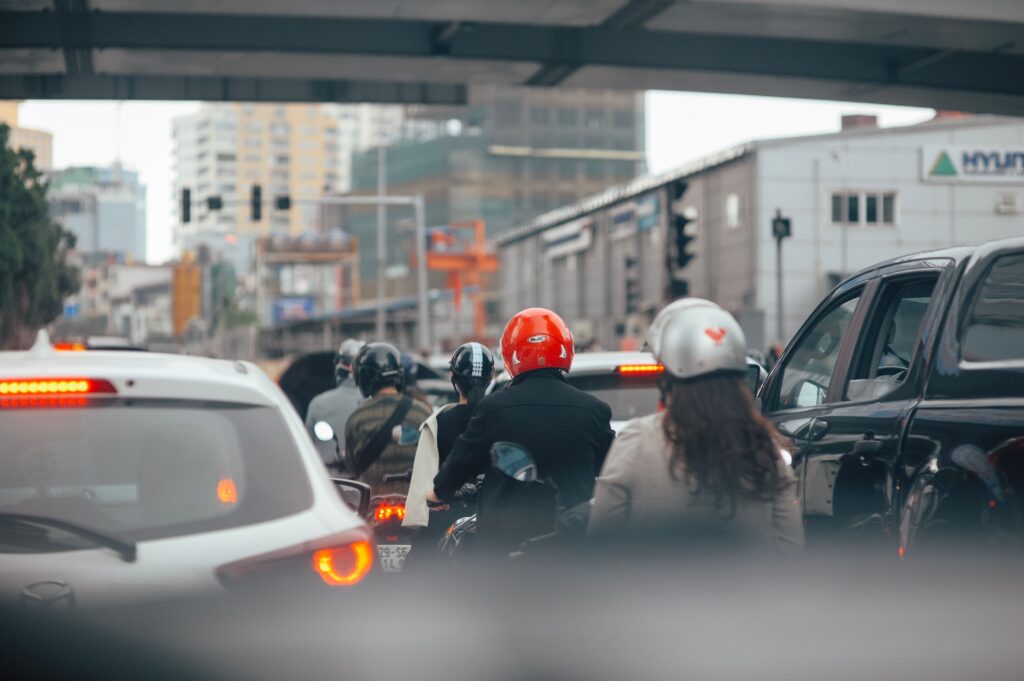
Motorcycles present visibility challenges that do not affect larger passenger vehicles to the same degree. Their smaller profile can make them more difficult to notice, particularly at intersections, during lane changes, in heavy traffic, or when visibility is reduced. NHTSA specifically advises motorists to understand safety challenges involving motorcycle size and visibility.
That does not mean drivers are automatically excused when they fail to notice a motorcycle.
Motorists generally have a responsibility to pay attention to surrounding traffic, check before turning or changing lanes, follow right-of-way rules, and operate their vehicles with reasonable care. When a driver failed to see a motorcycle that was lawfully present and reasonably visible, the driver’s failure to maintain a proper lookout may become important evidence of negligence.
At the same time, every accident requires an individual investigation. Motorcycle visibility, speed, positioning, lighting, traffic conditions, and the conduct of both motorists can affect motorcycle crash liability.
If you were injured after another driver entered your path, turned in front of you, or changed lanes into your motorcycle, an attorney can review the circumstances and determine whether another party’s negligence may support a personal injury claim.
Key Takeaways
- Failing to see a motorcycle does not automatically excuse a driver from liability. Drivers must use reasonable care and remain attentive to motorcycles and other vehicles sharing the road.
- Motorcycle size can contribute to visibility problems. NHTSA recognizes that motorcycles are smaller and can be less visible than other vehicles, which makes careful observation by motorists especially important.
- Intersections and lane changes deserve particular attention. A driver who turns across a motorcycle’s path or moves into an occupied lane may be liable when inadequate observation or another negligent act contributes to the collision.
- Evidence determines whether the motorcycle was reasonably visible. Crash-scene photographs, witness statements, vehicle damage, surveillance footage, lighting conditions, electronic evidence, and reconstruction analysis may help establish what each person could have seen.
- The motorcyclist’s conduct may also be evaluated. Comparative or contributory negligence rules vary by state, so allegations involving speeding, visibility equipment, or other conduct can affect a claim differently depending on where the crash occurred.
Why Are Motorcycles More Difficult for Drivers to See?
A motorcycle occupies much less visual space than a car, SUV, or commercial truck. NHTSA identifies a motorcycle’s smaller size as one reason it may be less visible to other motorists.
Several circumstances can make detection even more challenging.
Vehicle Blind Spots
Cars, SUVs, and trucks have areas around the vehicle that may not be visible through mirrors alone. A motorcycle’s smaller profile can allow it to remain within one of these areas more easily than a larger vehicle.
Drivers should therefore check their surroundings carefully before changing lanes, merging, or turning.
Intersections
Intersections require drivers to process multiple sources of information quickly, including traffic signals, signs, pedestrians, vehicles, and approaching motorcycles.
A driver may look in the direction of an approaching motorcycle without properly recognizing it as a hazard. NHTSA’s motorcycle safety materials note that failure by other motorists to perceive motorcyclists occurs in a significant portion of right-of-way crashes involving motorcycles.
Lighting and Weather
Low light, glare, rain, fog, and other environmental conditions may reduce visibility. FHWA notes that motorcycles can be particularly difficult to see early or late in the day when lighting levels are lower.
Poor conditions generally call for greater caution rather than less. A driver’s speed, following distance, observation, and decision-making may therefore need to be evaluated in light of the conditions at the time.
Visual Clutter
Busy urban roads can contain signs, parked vehicles, pedestrians, buildings, advertisements, and numerous moving vehicles. Against a complex background, a smaller road user may be harder to detect.
These factors help explain why motorcycle visibility matters, but they do not determine legal responsibility by themselves.
When Can a Driver Be Liable for Failing to See a Motorcycle?
Liability generally requires more than proving that a driver did not notice the motorcycle. The question is whether the driver’s conduct failed to meet the applicable standard of care and contributed to the crash.
Although negligence laws differ by state, an injured motorcyclist typically needs evidence supporting four basic concepts:
Duty of Care
Motorists owe other road users a duty to operate their vehicles with reasonable care and comply with applicable traffic laws.
Breach of Duty
A driver may breach that duty through conduct such as:
- Failing to maintain a proper lookout
- Turning without adequately checking for approaching traffic
- Making an unsafe lane change
- Failing to yield the right of way
- Driving while distracted
- Following too closely
- Traveling too fast for conditions
- Ignoring traffic signals or signs
A statement that the driver simply “didn’t see” the motorcycle may be relevant, but investigators should determine why the driver did not see it.
Causation
The negligent conduct must have contributed to causing the accident.
For example, it is not enough to establish that a driver was distracted at some point during a trip. Evidence must connect the negligent behavior to the collision and resulting injuries.
Damages
Finally, the motorcyclist must have suffered legally compensable harm, such as physical injuries, medical expenses, lost income, property damage, or other losses.
Which Motorcycle Accidents Commonly Involve Visibility Problems?
Visibility can become an issue in several recurring motorcycle crash scenarios.
Left-Turn Accidents
A driver may turn left across the path of an approaching motorcycle at an intersection, driveway, or entrance.
These crashes can raise questions about whether the driver properly judged the motorcycle’s presence, distance, and speed before beginning the turn.
Lane-Change Collisions
A motorist may move into a motorcycle’s lane after checking a mirror but failing to check the surrounding area adequately.
The investigation may examine whether the driver signaled, checked mirrors and blind spots, and had sufficient opportunity to observe the motorcycle.
Vehicles Entering the Roadway
Drivers leaving parking lots, businesses, side streets, and driveways must assess approaching traffic before entering the roadway.
If a motorcycle had the right of way and was reasonably visible, a driver’s failure to notice it may support a negligence claim.
Rear-End Crashes
A motorcycle stopped or slowing with traffic may be struck from behind by an inattentive motorist.
Visibility may be raised as an issue, particularly at night or in poor weather, but investigators should also examine following distance, distraction, speed, lighting, and the driver’s attention to traffic ahead.
Does a Driver’s Blind Spot Excuse a Motorcycle Collision?
Not necessarily.
Blind spots are a known feature of motor vehicles. Their existence does not automatically relieve a driver of responsibility for checking whether a lane is clear before moving into it.
Whether the driver acted reasonably depends on the circumstances. Relevant questions may include:
- Where was the motorcycle before the collision?
- How long had it occupied the lane?
- Did the driver use a turn signal?
- Did the driver check mirrors?
- Was a shoulder check appropriate?
- Was the motorcycle traveling predictably?
- Were other vehicles obstructing the driver’s view?
- Was the driver distracted?
- How quickly did the lane change occur?
This illustrates why the phrase “I didn’t see the motorcycle” does not resolve liability. A legal investigation considers whether the driver should have seen the motorcycle while exercising reasonable care.
How Do You Prove the Driver Should Have Seen the Motorcycle?
Motorcycle accident cases often depend on reconstructing what occurred in the seconds before impact.
Crash-Scene Evidence
Photographs and videos can document vehicle positions, sightlines, road design, traffic controls, weather, lighting, skid marks, debris, and damage.
This evidence may help establish where each vehicle was traveling and whether anything obstructed the driver’s view.
Witness Statements
Independent witnesses may describe the motorcycle’s location, the driver’s actions, traffic conditions, or how the collision occurred.
Witness information should be collected promptly when possible because memories can become less detailed over time.
Surveillance and Traffic Cameras
Businesses, residences, intersections, or nearby vehicles may have cameras that captured the collision or events immediately preceding it.
Because some recordings are routinely overwritten, identifying potential footage quickly can be important.
Vehicle Damage and Physical Evidence
The location and nature of damage can sometimes help accident reconstruction professionals evaluate the vehicles’ positions and movement.
Electronic Evidence
Depending on the vehicles and circumstances, investigators may examine electronic vehicle information, phone records obtained through appropriate legal procedures, navigation information, or other digital evidence.
Evidence that the motorist was using a phone or otherwise distracted can become particularly important when the driver claims not to have noticed a clearly visible motorcycle.
Accident Reconstruction
Serious or disputed crashes may require an accident reconstruction expert.
An expert may analyze physical evidence, roadway geometry, vehicle movement, sight distance, speed, and other factors to evaluate whether the driver had an opportunity to perceive and respond to the motorcycle.
Can the Motorcyclist Share Responsibility for the Accident?
Yes. A motorcycle crash does not automatically make the other motorist completely responsible.
Depending on the evidence, defendants may argue that the rider contributed to the collision through speeding, unsafe lane positioning, an improper maneuver, inadequate lighting, or another action.
The effect of shared fault depends heavily on state law.
States use different systems for addressing comparative or contributory negligence. In some jurisdictions, an injured person can recover reduced compensation when partially responsible. Other states impose different restrictions, including rules that can bar recovery at certain fault levels.
Because no target state applies to this article, the specific effect of shared responsibility should be determined under the law of the state where the claim arises.
Importantly, visibility should not be treated as a substitute for investigating fault. The fact that motorcycles are smaller does not establish that the rider caused the collision.
What Compensation Can an Injured Motorcyclist Pursue?
Motorcyclists have little physical protection when struck by a larger vehicle. NHTSA reported that 6,228 motorcyclists were killed in traffic crashes in 2024, accounting for 16% of all traffic fatalities.
When another party’s negligence causes a motorcycle crash, an injured rider may be able to seek compensation for losses such as:
- Emergency treatment
- Hospitalization
- Surgery
- Rehabilitation
- Current and future medical expenses
- Lost income
- Reduced earning capacity
- Motorcycle and property damage
- Pain and suffering
- Disability
- Disfigurement
- Other damages available under applicable state law
The available damages and rules governing recovery vary by jurisdiction.
Serious injuries may require a careful evaluation of future medical treatment, work limitations, and long-term effects before the full value of a claim can be determined.
What Should You Do After a Visibility-Related Motorcycle Crash?
Medical treatment should be the first priority after a serious collision. Even injuries that are not immediately obvious can require prompt evaluation.
When possible, an injured rider should also preserve information that may help establish how the crash happened. This can include photographs, videos, witness contact details, police information, medical records, repair estimates, damaged riding gear, and communications concerning the collision.
Avoid repairing or disposing of the motorcycle, helmet, or other potentially relevant physical evidence before determining whether it may be important to the investigation.
It can also be helpful to document your recollection of the accident while events are still fresh, including where you were traveling, the traffic signal or right-of-way conditions, and what the other vehicle did before impact.
An experienced motorcycle accident attorney can investigate visibility, sightlines, driver conduct, and available evidence while also determining which state laws govern liability and filing deadlines.
Frequently Asked Questions
Is “I didn’t see the motorcycle” a valid defense?
It does not automatically relieve a driver of responsibility. Liability depends on whether the driver exercised reasonable care and whether a reasonably attentive motorist should have seen the motorcycle under the circumstances.
Why do drivers sometimes fail to see motorcycles?
Motorcycles have a smaller visual profile than passenger vehicles and can be harder to detect in blind spots, busy traffic environments, or reduced lighting. NHTSA specifically identifies size and visibility as safety challenges motorists should understand.
Can a driver be liable for turning left in front of a motorcycle?
Yes, potentially. Liability may exist when a driver fails to yield or otherwise acts negligently while turning across a motorcycle’s path. Right-of-way rules and negligence standards vary by state, so the specific circumstances must be evaluated.
Who is at fault when a car changes lanes into a motorcycle?
Fault depends on the evidence. Investigators may examine whether the driver checked the surrounding area, signaled, maintained a proper lookout, and made the lane change safely, as well as whether the motorcyclist’s conduct contributed to the collision.
What if the motorcycle was in the driver’s blind spot?
Being in a blind spot does not automatically establish fault by either party. Drivers are generally expected to account for areas that cannot be seen through mirrors before changing lanes or making other maneuvers.
Can a motorcyclist recover compensation if partially at fault?
Possibly. The answer depends on the state’s comparative or contributory negligence rules and the rider’s assigned percentage of responsibility. Some states reduce compensation based on fault, while others impose stricter limits on recovery.
What evidence is most useful in a motorcycle visibility accident?
Useful evidence can include crash-scene photographs, surveillance footage, witness statements, vehicle damage, roadway and lighting conditions, electronic information, police documentation, and accident reconstruction analysis.
References
National Highway Traffic Safety Administration, Motorcycle Safety
NHTSA Motorcycle Safety
National Highway Traffic Safety Administration, Countermeasures That Work: Motorcycle Safety
NHTSA Motorcycle Safety Countermeasures
National Highway Traffic Safety Administration, Strategies to Increase Rider Conspicuity
NHTSA Rider Conspicuity Guidance
Federal Highway Administration, Road Safety Fundamentals: Motorcyclists
FHWA Road Safety Fundamentals
National Highway Traffic Safety Administration, Fatality Analysis Reporting System
NHTSA Fatality Analysis Reporting System
Protecting Your Rights After a Driver Fails to See Your Motorcycle
Motorcycles can be more difficult to see than larger vehicles, but visibility challenges do not give motorists permission to overlook them. Drivers must remain attentive to surrounding traffic and take reasonable precautions before turning, merging, or changing lanes.
When a driver claims they did not see a motorcycle, determining liability requires examining why. Sightlines, distraction, vehicle positioning, road conditions, witness accounts, camera footage, and physical evidence may help establish whether an attentive driver should have recognized and responded to the motorcycle.
If you or a loved one was injured because another motorist failed to see a motorcycle or otherwise drove negligently, Isaacs & Isaacs Law Firm can investigate the collision, identify potentially liable parties, and explain the laws that apply to your claim. Contact Isaacs & Isaacs for a free consultation to discuss your legal options.