
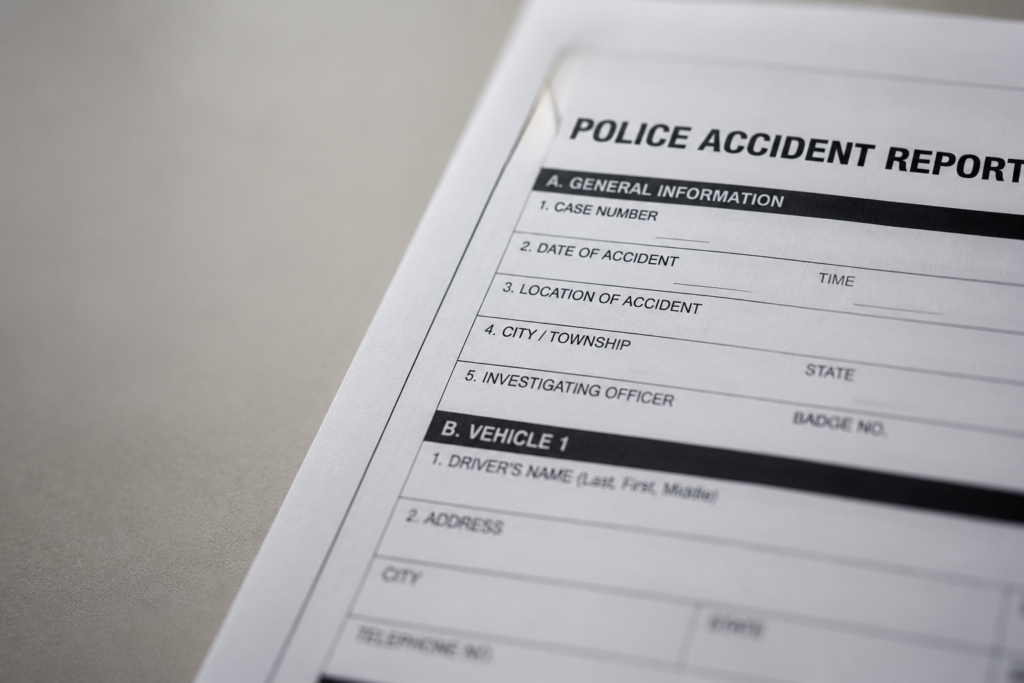
What to Know About Filing a Claim Without a Police Report
Yes, you may be able to pursue a no-police-report accident claim even if law enforcement never created an official accident report. While a police report can strengthen a case, Kentucky injury victims can often rely on other forms of evidence, including medical records, photographs, witness statements, insurance documentation, and expert analysis to establish liability and damages.
Why Missing Documentation Does Not Always Mean Losing Your Case
After a car accident, many people assume they cannot pursue compensation unless a police officer responds to the scene and completes an official report. This misconception causes some injured victims to delay seeking legal help or abandon potentially valid claims altogether.
The reality is that while police reports can be valuable pieces of evidence, they are not always required to pursue compensation. Many accident claims are successfully resolved using alternative forms of proof that demonstrate how the collision occurred and who was responsible.
If you were injured in a Kentucky car accident and are concerned about the lack of a police report, understanding your legal options can help you make informed decisions about your recovery and your claim. An experienced attorney can evaluate the available evidence and help determine the best path forward.
Key Takeaways
- Medical records, photographs, witness testimony, and insurance records may help establish liability and damages.
- The absence of a police report can create challenges, particularly when fault is disputed.
- Kentucky’s no-fault insurance system may still allow access to certain benefits even without a police report.
- A personal injury attorney can help gather evidence and build a stronger claim when official documentation is unavailable.
Can You File an Injury Claim Without a Police Report?
In many situations, yes.
A police report is helpful because it creates an official record of the accident. However, it is generally not the only evidence that can support a personal injury claim.
Insurance companies, attorneys, and courts often evaluate a variety of evidence when determining:
- How the accident occurred
- Who may be responsible
- Whether injuries resulted from the crash
- What damages the victim suffered
If sufficient evidence exists from other sources, the lack of a police report does not automatically prevent recovery.
This is particularly important because not every accident results in police involvement. Some collisions occur on private property, involve delayed injury symptoms, or happen under circumstances where drivers choose not to contact law enforcement immediately.
Why Are Police Reports Important in Accident Claims?
Although they are not always required, police reports can provide valuable information.
Official Documentation of the Incident
Police reports create a contemporaneous record of what occurred shortly after the accident.
This may include:
- Date and time of the collision
- Vehicle information
- Driver information
- Road and weather conditions
- Officer observations
Statements From Drivers and Witnesses
Reports often contain statements gathered while memories are still fresh.
These statements can become important if a driver later changes their version of events.
Preliminary Fault Assessments
While police officers do not always make final determinations regarding liability, their observations and citations may influence insurance investigations.
Preservation of Evidence
Police reports help preserve details that might otherwise be forgotten or disputed later.
What Evidence Can Help Prove Your Case Without a Police Report?
The strongest alternative evidence often comes from multiple sources working together.
Medical Records
Medical documentation may be one of the most important forms of accident evidence without police involvement.
Medical records can establish:
- The existence of injuries
- The timing of treatment
- The severity of harm
- The connection between the accident and the injuries
Seeking prompt treatment can strengthen this evidence significantly.
Photographs and Videos
Photographs taken immediately after an accident can provide powerful visual evidence.
Helpful images may include:
- Vehicle damage
- Road conditions
- Traffic signals
- Skid marks
- Visible injuries
Video footage may provide even stronger support.
Dashcam Footage
Dashcams can capture critical details that establish liability.
Footage may reveal:
- Traffic violations
- Failure to yield
- Distracted driving
- Speeding
- Unsafe lane changes
Objective video evidence often carries substantial weight during claim investigations.
Witness Statements
Independent witnesses can help verify what happened.
Witnesses may provide information regarding:
- Driver behavior
- Traffic signals
- Vehicle positions
- Road conditions
Their testimony may become particularly important when fault is disputed.
Insurance Documentation
Insurance communications often contain admissions, statements, and investigative findings that may support a claim.
These records may help establish timelines and identify inconsistencies in a driver’s account of the accident.
Vehicle Damage Analysis
The location and nature of vehicle damage can help reconstruct how a collision occurred.
Damage patterns may support:
- Rear-end collision claims
- Lane-change accidents
- Intersection crashes
- Sideswipe incidents
Electronic Evidence
Modern vehicles often contain electronic data recorders that preserve information about speed, braking, and vehicle operation before a crash.
Cell phone records may also become relevant when distracted driving is suspected.
When Can the Absence of a Police Report Create Challenges?
Although claims may proceed without a report, certain situations can become more difficult.
Disputed Liability
If both drivers provide conflicting accounts and no independent evidence exists, proving fault may become more challenging.
Insurance companies may question liability when no official report is available.
Delayed Reporting
Waiting too long to report an accident can create credibility concerns.
Insurers may argue that injuries resulted from another event rather than the accident.
Limited Evidence
When photographs, witnesses, and medical documentation are unavailable, building a compelling claim becomes more difficult.
Serious Injury Cases
Catastrophic injury claims often involve substantial compensation demands.
Insurers may scrutinize these claims more aggressively when official accident documentation is missing.
How Does Kentucky Law Affect Accident Claims?
Kentucky operates under a no-fault insurance system.
Following many accidents, injured individuals initially seek benefits through their Personal Injury Protection (PIP) coverage.
PIP benefits may help cover:
- Medical expenses
- Lost wages
- Certain out-of-pocket costs
However, fault remains important in many situations.
When Can You Pursue a Liability Claim?
A victim may pursue compensation from an at-fault driver when injuries meet certain thresholds or damages exceed available no-fault benefits.
Evidence remains critical in these situations regardless of whether a police report exists.
Kentucky’s Comparative Fault Rules
Kentucky follows a pure comparative fault system.
If an injured person shares responsibility for a crash, compensation may be reduced by their percentage of fault.
Because fault allocations directly affect recovery, gathering strong evidence becomes particularly important when no police report is available.
How Can a Lawyer Help Build a Claim Without a Police Report?
Attorneys frequently handle cases where police reports are incomplete, inaccurate, or nonexistent.
Conducting Independent Investigations
An attorney may gather:
- Witness statements
- Surveillance footage
- Medical documentation
- Vehicle records
- Electronic data
Identifying Additional Evidence
Experienced lawyers often uncover evidence that accident victims may not realize exists.
This may include:
- Nearby security footage
- Traffic camera recordings
- Business surveillance systems
- Expert analysis
Working With Experts
In complex cases, accident reconstruction professionals may help establish how the collision occurred.
These experts can analyze physical evidence and provide objective conclusions regarding fault.
Negotiating With Insurance Companies
Insurers often challenge claims with limited documentation.
A lawyer can present evidence effectively and advocate for fair compensation.
What Should You Do After an Accident If No Police Report Exists?
Taking prompt action can strengthen your claim.
Seek Medical Attention
Medical treatment creates documentation that links your injuries to the accident.
Gather Available Evidence
Preserve:
- Photos
- Videos
- Witness information
- Medical records
- Repair estimates
Notify Your Insurance Company
Report the accident promptly and provide accurate information.
Avoid Speculation
Stick to known facts when discussing the accident with insurers.
Consult a Personal Injury Lawyer
Early legal guidance can help identify evidence before it disappears and improve your ability to pursue compensation.
Frequently Asked Questions
Can I still receive compensation without a police report?
Yes. Many accident victims successfully recover compensation using medical records, photographs, witness statements, and other evidence.
Is a police report required to file an insurance claim in Kentucky?
Not always. Insurance companies may evaluate other available evidence when determining liability and damages.
What is the best alternative evidence if no police report exists?
Medical records, photographs, video footage, witness statements, and insurance documentation are often among the strongest alternatives.
Can a lawyer investigate an accident without a police report?
Yes. Attorneys frequently conduct independent investigations and gather evidence from multiple sources.
Does the lack of a police report mean I will lose my case?
No. While a police report can strengthen a claim, many successful injury cases proceed without one when sufficient evidence exists.
References
Kentucky Transportation Cabinet
https://transportation.ky.gov
Kentucky Court of Justice
https://kycourts.gov
Kentucky Legislature
https://legislature.ky.gov
National Highway Traffic Safety Administration
https://www.nhtsa.gov
Federal Highway Administration
https://highways.dot.gov
Protecting Your Right to Compensation After an Unreported Accident
A police report can be helpful after a crash, but it is not always required to pursue compensation. Medical records, witness testimony, photographs, video footage, and other documentation may help establish liability and demonstrate the extent of your injuries. The key is acting quickly to preserve evidence and protect your rights.
If you were injured in a Kentucky car accident and are concerned about pursuing a no police report accident claim, the team at Isaacs & Isaacs Law Firm can help evaluate your case, investigate the accident, and fight for the compensation you deserve. Contact us today for a free consultation.